

Airlines Slowing Down To Conserve Fuel | Aero-News Network
Aero-News Network
RSS icon RSS feed
podcast icon MP3 podcast
Subscribe Aero-News e-mail Newsletter Subscribe

Airborne Unlimited -- Most Recent Daily Episodes

Episode Date

Airborne-Monday

Airborne-Tuesday

Airborne-Wednesday Airborne-Thursday

Airborne-Friday

Airborne On YouTube

Airborne-Unlimited-12.01.25

AirborneNextGen-
12.02.25

Airborne-Unlimited-11.19.25

Airborne-AffordableFlyers-11.20.25

AirborneUnlimited-11.21.25

LIVE MOSAIC Town Hall (Archived): www.airborne-live.net

Sat, May 03, 2008

Airlines Slowing Down To Conserve Fuel

Time Cost Minimal... But Savings Can Add Up

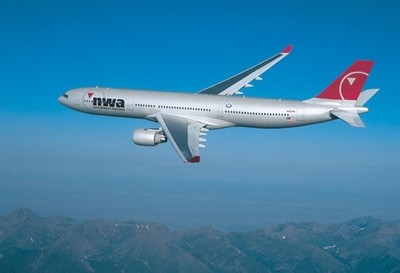
If it seems as though airline flights are taking even longer than they used to, well... that perception may not be entirely due to shoddy service and cramped seats. Several airlines -- among them JetBlue, Southwest, and Northwest -- have started slowing their planes down in flight, in order to save precious fuel.

Southwest started flying about 10 knots slower than usual two months ago, according to The Associated Press. JetBlue started trimming back two years ago, with most other airlines falling somewhere in between.

While the time difference is negligible on a per-flight basis -- a Northwest flight from Minneapolis to Hawaii now takes about two minutes longer than it used to -- the savings are substantial. Northwest estimates it will save $600,000 a year in fuel on that route alone.

JetBlue pegs the savings throughout its network at about $13.6 million per year.

United Airlines -- which pays nearly $1 more per gallon of Jet-A than Southwest does, thanks to the latter's fuel-hedging policies -- relies on flight planning software to determine the optimal speed and altitude for each flight. That software should save the airline $20 million a year, according to spokesperson Megan McCarthy.

"What we're doing is flying at a more consistent speed to save fuel," McCarthy said. Of course, it's seldom possible to fly a truly optimized route from point A to B -- and when you factor in time to taxi, ATC vectors and good old Mother Nature, the savings may be less.

One airline says it's not utilizing the slow-down method, at least not as policy.

"We have the flying schedule to protect," said American Airlines spokesman John Hotard. Instead of deliberately flying slower, Hotard said American is relying on the addition of winglets to its Boeing 737s and 757s to cut fuel usage, as well as other more down-to-earth methods like keeping its planes plugged into ground power as long as possible.

Airline consultant Bob Mann notes slowing flights down results in other, ancillary costs as well. Increased flight time over the life of the airframe adds to maintenance costs, and longer hours for flight crews and cabin personnel.

"Everything's a tradeoff," he said.

FMI: www.southwest.com, www.nwa.com, www.united.com, www.jetblue.com, www.aa.com

Advertisement

More News

ANN's Daily Aero-Term (11.29.25): Waypoint

Waypoint A predetermined geographical position used for route/instrument approach definition, progress reports, published VFR routes, visual reporting points or points for transiti>[...]

ANN's Daily Aero-Linx (11.29.25)

Aero Linx: Sentimental Journey to Cub Haven Sentimental Journey Flyin began in 1986 with a group of dedicated volunteers working to provide a sentimental return to Lock Haven, the >[...]

NTSB Prelim: Jabiru USA Sport Aircraft LLC J230-SP

The Pilot Would Often Fly Over Their House At A Low Altitude And That Family Members Would Go Outside To Wave On November 14, 2025, at 1708 eastern standard time, a Jabiru USA Spor>[...]

Classic Aero-TV: Crafting The Future of eVTOL Infrastructure

From 2024 (YouTube Edition): Volatus Infrastructure Paves The Way The name “Volatus” seems to be everywhere these days, popping up in a series of partnerships and proje>[...]

Klyde Morris (11.28.25)

Fortnite Conquers All, Klyde FMI: www.klydemorris.com>[...]

blog comments powered by Disqus



Advertisement

Advertisement

Podcasts

Advertisement

© 2007 - 2025 Web Development & Design by Pauli Systems, LC

