
Gone West: U2 Pilot Richard Stephen Heyser | Aero-News Network
Aero-News Network
RSS icon RSS feed
podcast icon MP3 podcast
Subscribe Aero-News e-mail Newsletter Subscribe

Airborne Unlimited -- Most Recent Daily Episodes

Episode Date

Airborne-Monday

Airborne-Tuesday

Airborne-Wednesday Airborne-Thursday

Airborne-Friday

Airborne On YouTube

Airborne-Unlimited-12.08.25

AirborneNextGen-
12.09.25

Airborne-Unlimited-12.10.25

Airborne-AffordableFlyers-12.11.25

AirborneUnlimited-12.12.25

AFE 2025 LIVE MOSAIC Town Hall (Archived): www.airborne-live.net

Mon, Oct 13, 2008

Gone West: U2 Pilot Richard Stephen Heyser

30-Year Veteran Took First Photos Of Cuban Missile Sites In 1962 Crisis

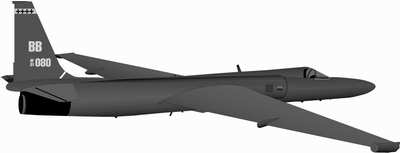
Richard Stephen Heyser, a retired US Air Force Lieutenant Colonel and U-2 spy plane pilot who took the first reconnaissance photos of secret missile launch sites during the 1962 Cuban missile crisis, died October 6 at a nursing home in Port St. Joe, FL.

A long-time resident of nearby Apalachicola, the 81-year-old Heyser had suffered a series of strokes in recent years, the Los Angeles Times reported.

In a 2005 interview with the Associated Press, Heyser said that no one was more relieved than he that the crisis ended peacefully, stating he did not want to go down in history as the man who started World War III.

"I kind of felt like I was going to be looked at as the one who started the whole thing," Heyser said. "I wasn't anxious to have that reputation."

In October 1962, Heyser was one of 11 Air Force U-2 pilots who took photos over Cuba, making five reconnaissance flights in nine days.

With the photos as proof, on October 22, 1962 President Kennedy announced to the world that the Soviet Union was building secret launch sites for nuclear missiles just 90 miles south of Key West. Six days later, the crisis ended when Soviet Premier Nikita Krushchev agreed to withdraw the missiles.

Born April 3, 1927, Heyser grew up in Apalachicola, a town in the state's panhandle on the Gulf Coast. As a teenager watching pilots training for World War II at nearby Tyndall Field, Heyser decided he wanted to fly and joined the Army Air Forces in 1944.

After the war, Heyser graduated from what is now Florida State University.

In 1952, Heyser began Air Force pilot training. He flew combat missions during the Korean War, and later served two combat tours during the Vietnam War. Retiring in 1974 after 30 years of service, he returned to Apalachicola, the Times said.

Heyser is survived by Jacquelyn, his wife of 54 years, and three sons, eight grandchildren and a sister.

FMI: http://en.wikipedia.org/wiki/Lockheed_U-2

Advertisement

More News

ANN's Daily Aero-Linx (12.12.25)

Aero Linx: Commercial Aviation Safety Team (CAST) Founded in 1997, the Commercial Aviation Safety Team (USCAST) has developed an integrated, data-driven strategy to reduce the comm>[...]

ANN's Daily Aero-Term (12.12.25): Land And Hold Short Operations

Land And Hold Short Operations Operations that include simultaneous takeoffs and landings and/or simultaneous landings when a landing aircraft is able and is instructed by the cont>[...]

ANN FAQ: How Do I Become A News Spy?

We're Everywhere... Thanks To You! Even with the vast resources and incredibly far-reaching scope of the Aero-News Network, every now and then a story that should be reported on sl>[...]

NTSB Final Report: Cirrus Design Corp SF50

Pilot’s Inadvertent Use Of The Landing Gear Control Handle Instead Of The Flaps Selector Switch During The Landing Rollout Analysis: The pilot reported that during the landin>[...]

Airborne 12.08.25: Samaritan’s Purse Hijack, FAA Med Relief, China Rocket Fail

Also: Cosmonaut Kicked Out, Airbus Scales Back, AF Silver Star, Russian A-60 Clobbered A Samaritan’s Purse humanitarian flight was hijacked on Tuesday, December 2, while atte>[...]

blog comments powered by Disqus



Advertisement

Advertisement

Podcasts

Advertisement

© 2007 - 2025 Web Development & Design by Pauli Systems, LC

