Spectacle Sans Substance
On 02 December 2022, the United States Air Force rolled out its new, long-range, intercontinental, stealth, strategic bomber during a nighttime ceremony contrived to obfuscate details of the aircraft’s design and capabilities.
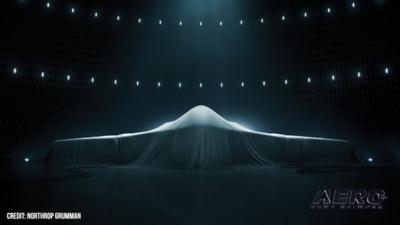
The event, which coincided serendipitously with a new report on Chinese military capabilities, provided a dramatic backdrop against which senior Pentagon officials proclaimed the new bomber—Northrop Grumman’s B-21—the cornerstone of American deterrence capability for decades to come.
Notwithstanding stratospheric pomp, talents of brass, riots of fruit salad, a lightshow worthy of a Pink Floyd concert, and a score lifted from Hans Zimmer’s fever dreams, the rollout provided little new information about the B-21 or the program by which it was developed. Neither the bomber’s planned production-rate nor even the number of engines by which it is powered were disclosed.
Enigmatically veiled in a vast tarpaulin, aircraft 00001 was rolled from a hangar at Northrop Grumman’s Palmdale, California plant. The tarpaulin’s removal elicited peals of applause from a sounder of ostensible dignitaries, members of the press, and some two-thousand Northrop Grumman workers herded thither to betoken the American middle class. The revealed aircraft—a dusky flying-wing evocative of its B-2 Spirit forebear—confronted the assemblage with a deep keel; eccentric cockpit windows evocative of eyes; and diminutive engine-inlets to the starboard and port sides of the aircraft’s longitudinal axis. The B-21 appeared less massive than the B-2, but its wingspan seemed nearly as wide—and possibly of a different sweep. Clearly evident, however, was the B-21’s utter absence of angular airframe features, and the connotative advantage in stealth it likely holds over its elder stablemate.
A senior Northrop Grumman official later confirmed the B-21 will be “a lot stealthier” than the B-2 and feature improvements in maintainability and reliability conducive to its operating continuously in full stealth mode. By contrast, the B-2’s low-observable surfaces require many hundreds of man-hours of maintenance between missions. The B-21 further improves on the B-2 by eliminating the “special tape” that covers the latter’s airframe seams and panel lines, the Northrop Grumman official concluded.
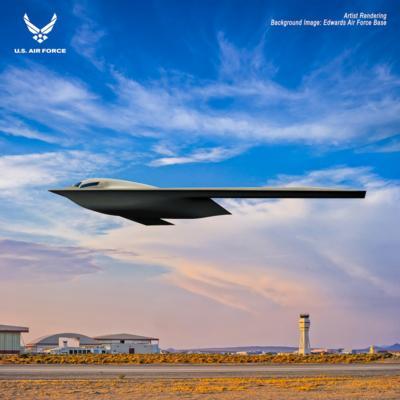
United States Secretary of Defense Lloyd J. Austin III thanked Northrop Grumman and its employees for “getting this big job done,” enthusing: “This is a proud day for the Air Force and the country.”
“The B-21 looks imposing,” Austin remarked, “but what’s under the frame and space-age coatings is even more impressive.”
Secretary Austin went on to confide that the B-21 will have longer range than any other bomber, stating: “It won’t need to be based in theater. It won’t need logistical support to hold any target at risk.” Austin added: “Fifty-years of low-observability technology have gone into this aircraft, and even the most sophisticated air defense systems will struggle to detect the B-21.”
Speaking with the press prior to the rollout, United States Air Force Chief of Staff General Charles Q. Brown Jr. described the B-21 as a “high cycle aircraft,” indicating it will fly frequent sorties with minimal maintenance intervals between. Brown posited the B-21’s digital design will facilitate a speedy test program.
That the B-21 was rolled out well in advance of its planned mid-2023 first flight speaks to the imminence of ground-test activities—such as engine runs and taxi tests—during which the aircraft will be exposed to public view.



 ANN's Daily Aero-Term (12.04.25): Cooperative Surveillance


 See All