Wed, Jan 12, 2005
NPRM Endorses Creation Of "All-Cargo" Security Program
 NATA says it supports a
Transportation Security Administration (TSA) proposal to address
cargo security using a risk-based approach.
NATA says it supports a
Transportation Security Administration (TSA) proposal to address
cargo security using a risk-based approach.
The TSA Notice of Proposed Rulemaking (NPRM), believed to be the
agency's first, announced formation of a new "All-Cargo" security
program for larger cargo aircraft and several other new security
initiatives for the cargo industry. "We are particularly pleased
that the TSA issued this as an NPRM, so that industry input is
received prior to implementation of new regulations. The TSA's
trend of direct to final rules appears to have finally subsided,"
explained NATA Vice President Eric R. Byer.
The association agreed with the TSA's assessment that a risk
management philosophy is the best approach to securing cargo
carried on aircraft.
"This approach recognizes that 100% screening of all cargo is
not only impractical but would cause incalculable damage to the
nation's economy," Byer said. "The layered approach to security
will allow both government and industry to direct resources to
those areas with the greatest risk that can then derive the
greatest security benefit."
For the smaller cargo carriers represented by NATA, the TSA
intends to continue compliance with the Twelve-Five Standard
Security Program (TFSSP). The NPRM proposes that any all-cargo
aircraft weighing more than 45,500 kg will comply with the new
All-Cargo program. Most all-cargo aircraft currently subject to the
TFSSP are small businesses operating as Part 135 on-demand air
carriers.
"We believe, and the TSA concurs, that the TFSSP imposes the proper
security level by recognizing that these carriers' smaller size and
operational environment create a different security risk profile
than that of the large aircraft cargo haulers," Byer said.
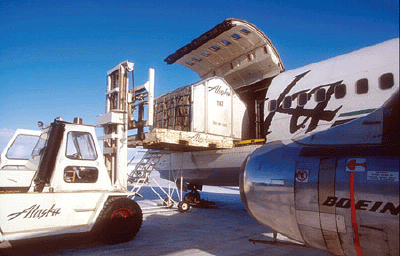
Of concern to NATA was a proposed expansion of security areas,
known as SIDAs, to include cargo areas at certain airports already
subject to security regulations. NATA believes the costs for this
proposal and the potential safety impacts for nearby general
aviation areas have not been adequately considered by the TSA.
NATA's comments also suggested some changes to the proposed
rules to clarify the regulatory intent and prevent confusion within
the industry.
More News
“We respectfully call on the City of Mesa to: 1. Withdraw the landing fee proposal immediately 2. Engage with the aviation community before making decisions that impact safet>[...]
High Speed Taxiway A long radius taxiway designed and provided with lighting or marking to define the path of aircraft, traveling at high speed (up to 60 knots), from the runway ce>[...]
Aero Linx: International Federation of Airworthiness (IFA) IFA uniquely combines together all those with responsibility for policies, principles and practices concerned with the co>[...]
Controller’s Expectation That VW02 Would Have Departed Sooner Led To An Inadequate Scan And Loss Of Situational Awareness Analysis: A Robinson R-44 helicopter N744AF, VW02 (V>[...]
A Few Questions AND Answers To Help You Get MORE Out of ANN! 1) I forgot my password. How do I find it? 1) Easy... click here and give us your e-mail address--we'll send it to you >[...]



 Aero-News: Quote of the Day (12.09.25)


 See All