
Incident Report Released In June K-Max Unmanned Aircraft Accident | Aero-News Network
Aero-News Network
RSS icon RSS feed
podcast icon MP3 podcast
Subscribe Aero-News e-mail Newsletter Subscribe

Airborne Unlimited -- Most Recent Daily Episodes

Episode Date

Airborne-Monday

Airborne-Tuesday

Airborne-Wednesday Airborne-Thursday

Airborne-Friday

Airborne On YouTube

Airborne-Unlimited-12.08.25

AirborneNextGen-
12.09.25

Airborne-Unlimited-12.10.25

Airborne-AffordableFlyers-12.11.25

AirborneUnlimited-12.12.25

AFE 2025 LIVE MOSAIC Town Hall (Archived): www.airborne-live.net

Wed, Aug 13, 2014

Incident Report Released In June K-Max Unmanned Aircraft Accident

Wind, Load Oscillation Contributed To The Accident, Report Indicates

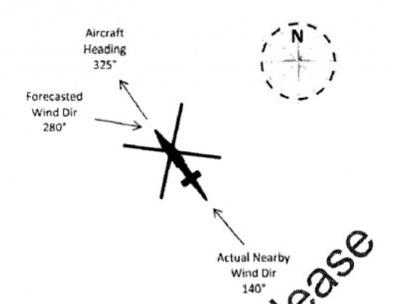
A report released by the U.S. Marine Corps indicates that civilian contractors employed by Lockheed Martin remotely piloting a K-Max unmanned helicopter in Afghanistan June 5, 2013 lost control of the aircraft because it had been programmed to anticipate a 15 mph headwind at its dropoff point, and encountered a tailwind instead.

The report, which was obtained by The Washington Post through the Freedom of Information Act, indicates that the operators had tried to employ a "weathervane" maneuver to bring the aircraft into the wind, but the 2,000 pound load began to swing underneath the aircraft and caused it to go down. The $11.1 million aircraft was destroyed by the impact. A laptop computer collecting data about the flight was ejected from the aircraft on impact and was recovered.

The investigators said that the accident was "preventable" and that the primary factor was the slow reaction by the operators to the unexpected wind. The investigators also said that the personnel on the ground should have provided updated weather information to the remote crew. According to the report, “the aircraft could not recover on its own based on the diverging conditions and its insufficient programming; it required human intervention."

The investigators have recommended improved communications between personnel on the ground and remote piloting crews, according to the report. They also recommend additional training to deal with swinging or oscillating loads suspended beneath unmanned aircraft.

Lockheed told the Washington Post that it has already addressed the concerns raised in the Marine Corps' report.

(Image from Marine Corps documents showing forecast and actual wind conditions at the time of the accident)

FMI: www.marines.mil

Advertisement

More News

ANN's Daily Aero-Linx (12.12.25)

Aero Linx: Commercial Aviation Safety Team (CAST) Founded in 1997, the Commercial Aviation Safety Team (USCAST) has developed an integrated, data-driven strategy to reduce the comm>[...]

ANN's Daily Aero-Term (12.12.25): Land And Hold Short Operations

Land And Hold Short Operations Operations that include simultaneous takeoffs and landings and/or simultaneous landings when a landing aircraft is able and is instructed by the cont>[...]

ANN FAQ: How Do I Become A News Spy?

We're Everywhere... Thanks To You! Even with the vast resources and incredibly far-reaching scope of the Aero-News Network, every now and then a story that should be reported on sl>[...]

NTSB Final Report: Cirrus Design Corp SF50

Pilot’s Inadvertent Use Of The Landing Gear Control Handle Instead Of The Flaps Selector Switch During The Landing Rollout Analysis: The pilot reported that during the landin>[...]

Airborne 12.08.25: Samaritan’s Purse Hijack, FAA Med Relief, China Rocket Fail

Also: Cosmonaut Kicked Out, Airbus Scales Back, AF Silver Star, Russian A-60 Clobbered A Samaritan’s Purse humanitarian flight was hijacked on Tuesday, December 2, while atte>[...]

blog comments powered by Disqus



Advertisement

Advertisement

Podcasts

Advertisement

© 2007 - 2025 Web Development & Design by Pauli Systems, LC

