Mon, Mar 03, 2014
Engineers On Earth Rehearsing Solar Panel Deployment
When Europe's environmental monitoring satellite Sentinel-1 is placed in orbit in a few weeks, it has to perform a complicated dance routine to unfold its large solar wings and radar antenna. Engineers have recently been making sure the moves are well rehearsed. Sentinel-1 is the first in a family of satellites built specifically to provide a stream of timely data for Europe’s ambitious Copernicus environmental monitoring program.
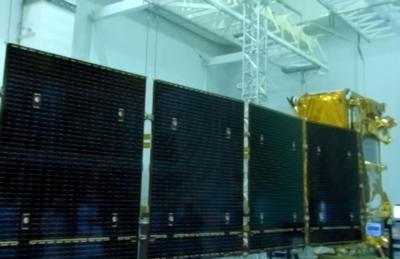
The spacecraft carries an advanced radar instrument to image Earth’s surface through cloud and rain, regardless of whether it is day or night. Delivering vital information for numerous operational services, from monitoring ice in the polar oceans to tracking land subsidence, Sentinel-1 is set to play a key role in the largest civil Earth-observation program ever conceived. Moreover, this new mission is the only European satellite specifically designed for fast response to emergencies such floods and earthquakes.
About seven years in the making, this new satellite will soon be launched from Europe’s Spaceport in French Guiana. Sentinel-1 will be shipped to the launch site next week, but has spent the last couple of months at Thales Alenia Space in Cannes, France, being put through a last set of stringent tests.
This included suspending the satellite from a structure to simulate weightlessness and carefully unfolding the solar wings and the 36-foot-long radar.
During launch, the solar wings and radar are folded up for protection and to fit into the Soyuz rocket fairing. After the satellite is released into space, the solar wings and radar deploy together, but in a specific sequence that takes around 10 hours to complete. The sequence is unique, choreographed to ensure that both deploy in the safest possible way.
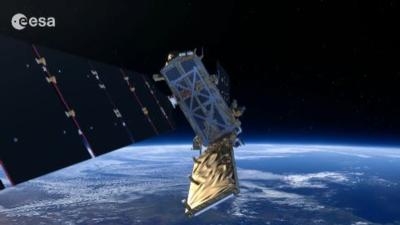
The sequence also allows power from the wings to be available as soon as possible so that the satellite is independent. The tests have shown that Sentinel-1 can handle this tricky sequence of events.
ESA’s Sentinel-1 Project Manager, Ramón Torres, said, “The deployment test of the satellite’s radar and solar array is a major achievement, especially since there were some very demanding requirements. Despite having gone through the extreme conditions of the previous environmental tests, the satellite deployed flawlessly, demonstrating that all the elements work harmoniously.
“Passing this important milestone is thanks to the culmination of many years of excellent collaboration between ESA and industrial partners.”
In preparation for Sentinel-1’s life in orbit, this last round of tests also included making sure that the communication links between the satellite and ESA’s operations center work as they should. With the satellite in good order, it is now being packed up for its journey to French Guiana. The launch date will be confirmed in the coming days, but is expected to be around the beginning of April.
(Top image captured from ESA video. Bottom image from ESA animation)
More News
Waypoint A predetermined geographical position used for route/instrument approach definition, progress reports, published VFR routes, visual reporting points or points for transiti>[...]
Aero Linx: Sentimental Journey to Cub Haven Sentimental Journey Flyin began in 1986 with a group of dedicated volunteers working to provide a sentimental return to Lock Haven, the >[...]
The Pilot Would Often Fly Over Their House At A Low Altitude And That Family Members Would Go Outside To Wave On November 14, 2025, at 1708 eastern standard time, a Jabiru USA Spor>[...]
From 2024 (YouTube Edition): Volatus Infrastructure Paves The Way The name “Volatus” seems to be everywhere these days, popping up in a series of partnerships and proje>[...]
Fortnite Conquers All, Klyde FMI: www.klydemorris.com>[...]



 ANN's Daily Aero-Term (11.29.25): Waypoint


 See All