
Fri, Jan 28, 2022
Manufacturer Tests Morphing Wing, Digital Controls, And Flat Antenna Under Green Initiative for Regional Commuters
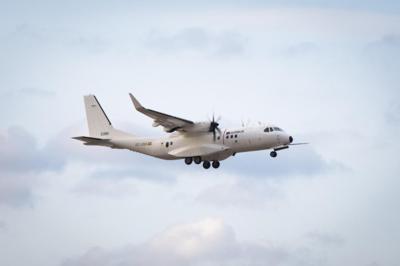
Airbus completed the first test flight of its regional commuter, demonstration aircraft for the Clean Sky 2 program.

The company sent its C295, currently named “Flight Test Bed 2”, off from its final assembly point in Seville, Spain. With its maiden voyage out of the way, the C295 now begins evaluating its prototype features for future designs that could make them more environmentally friendly.
The Airbus C295 is a part of both the pan-European Clean Sky 2 and the EU Horizon 2020 research and innovation programs. Each of them, among other efforts around the world, hopes to increase efficiency and decrease harmful emissions of aircraft by using a slate of fresh technologies, refinements, and materials. The C295 tests some relatively affordable, production-ready features like a semi-morphing wing, a digital flight control system, and a low-profile satellite communications antenna. So far, it's expected that a standard, regional, multimission aircraft could see up to 43% CO2 and 70% NOx reductions can be achieved in a typical Search and Rescue mission of 400 nautical miles, as well as 45% less noise during take-off.

The aerodynamic design uses an evolution of dynamic winglets on the morphing wing. Similarly tailored, revised flight controls see improvements to all primary control surfaces for better, more efficient flight. Inside the aircraft, the flight control system has been digitized for electronic command and adjustment in-flight. Throughout the build process, the C295 has been built with updated materials, including liberal use of 3d-printed scalmalloy parts to simplify design and create pieces that would be impossible to manufacture through traditional means.
“The first flight of the C295 FTB2 is a key milestone that represents an important step forward in the program, following the successful integration of the new aero structures, power-on and ground tests. A few years ago this program was just a dream of a more sustainable future for aviation. Today we are at the final stage and we finally made it fly” said Francisco Javier Sánchez Segura, executive vice president engineering Airbus defence and space.
More News
After Draining Both Wing Fuel Tanks, A Significant Amount Of Water Was Observed In The Right Wing Fuel Tank Analysis: The pilot, who was also the owner of the experimental amateur->[...]
“Airbus apologises for any challenges and delays caused to passengers and airlines by this event. The Company thanks its customers, the authorities, its employees and all rel>[...]
High Speed Taxiway A long radius taxiway designed and provided with lighting or marking to define the path of aircraft, traveling at high speed (up to 60 knots), from the runway ce>[...]
Aero Linx: Taylorcraft Foundation, Inc. The Taylorcraft Foundation is exclusively organized for charitable, educational & scientific activities and will preserve the history an>[...]
Also: USAF Reaper Accident, Baikonur Damage, Horizon eVTOL IFR/FIKI, New Glenn Update Honda has outlined its clearest timeline yet for its entry into the world of electric vertical>[...]


