
No Recovery Of Aircraft That Went Down In Alaska | Aero-News Network
Aero-News Network
RSS icon RSS feed
podcast icon MP3 podcast
Subscribe Aero-News e-mail Newsletter Subscribe

Airborne Unlimited -- Most Recent Daily Episodes

Episode Date

Airborne-Monday

Airborne-Tuesday

Airborne-Wednesday Airborne-Thursday

Airborne-Friday

Airborne On YouTube

Airborne-Unlimited-12.08.25

AirborneNextGen-
12.09.25

Airborne-Unlimited-12.10.25

Airborne-AffordableFlyers-12.11.25

AirborneUnlimited-12.12.25

AFE 2025 LIVE MOSAIC Town Hall (Archived): www.airborne-live.net

Thu, Aug 16, 2018

No Recovery Of Aircraft That Went Down In Alaska

National Park Service Says Getting To The Aircraft Is Too Risky

Recovery of an airplane that went down earlier this month in Denali National Park is too risky to attempt, according to the National Park Service.

In a news release, the NPS said the de Havilland Beaver (DHC-2), operated by K2 Aviation and flown by pilot Craig Layson, was carrying four Polish passengers when it impacted terrain near the summit of Thunder Mountain, roughly 14 miles southwest of the summit of Denali. NPS confirmed on Monday that four people died and a fifth was unaccounted for.

Rangers located the fifth body inside the wreckage August 10. NPS is not releasing the names of the passengers at the request of the Consulate General of the Republic of Poland in Los Angeles.

Throughout recovery operations, the focus of NPS has been on the safety of personnel, the stability of the aircraft and the complexity of the mission to recover the bodies. NPS rangers have made two short-haul visits to the crash site and gathered information to assess these issues.

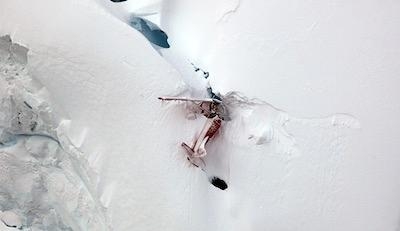
Hazards at the accident site include, but are not limited to, avalanche danger, steep snow/ice, crevasses, unstable seracs (blocks of ice loosely attached to the mountain) and aircraft-related concerns such as protruding pieces of jagged metal. The crevasse where the wreckage sits is a dangerous and potentially fatal terrain trap should even a small avalanche occur. The aircraft is broken in half behind the wing, and the tail section of the fuselage is actively pulling down the aircraft towards a glacier 3,500 feet below. Additionally, more than two and a half feet of new snow has fallen at the crash site and loaded the nearly 45-degree slope just above the aircraft.

Recovering the bodies and the aircraft under the current conditions would require an extremely complex and unfeasible recovery operation. NPS looks at three primary factors when evaluating risk: severity, probability and exposure. Due to the unique challenges posed by the steepness of terrain, the crevasse, avalanche hazard and the condition of the aircraft, NPS has determined that recovery of the deceased and/or removal of the aircraft exceed an acceptable level of risk in all three factors and will not be attempted.

(Image provided with National Park Service news release)

FMI: www.nps.gov

Advertisement

More News

ANN's Daily Aero-Term (12.13.25): Light Gun

Light Gun A handheld directional light signaling device which emits a brilliant narrow beam of white, green, or red light as selected by the tower controller. The color and type of>[...]

Aero-News: Quote of the Day (12.13.25)

“We have performed extensive ground testing by comparing warm up times, full power tethered pulls, and overall temperatures in 100 degree environments against other aircraft >[...]

NTSB Final Report: Gippsland GA-8

While Taxiing To Parking The Right Landing Gear Leg Collapsed, Resulting In Substantial Damage Analysis: The pilot made a normal approach with full flaps and landed on the runway. >[...]

Classic Aero-TV: Historically Unique -- Marlin Horst's Exquisite Fairchild 71

From 2014 (YouTube Edition): Exotic Rebuild Reveals Aerial Work Of Art During EAA AirVenture 2014, ANN's Michael Maya Charles took the time to get a history lesson about a great ai>[...]

Airborne 12.12.25: Global 8000, Korea Pilot Honors, AV-30 Update

Also: Project Talon, McFarlane Acquisition, Sky-Tec Service, JPL Earth Helo Tests Bombardier has earned a round of applause from the business aviation community, celebrating the fo>[...]

blog comments powered by Disqus



Advertisement

Advertisement

Podcasts

Advertisement

© 2007 - 2025 Web Development & Design by Pauli Systems, LC

