Shifting Tactics Call For New Protective Materials
Army tactics and training are constantly changing to meet the threat on the battlefield, and one such example is the attack helicopter.
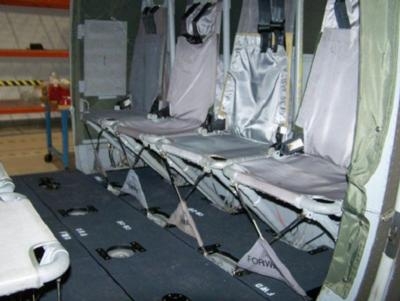
Originally the AH-1 Cobras were designed to arrive on station quickly, eliminate the threat, and move on to the next target. But in today's battlefield, attack helicopters like the AH-64 Apaches are providing air support to ground convoys, and often hovering over convoys to eliminate any sign of threats. These combat operations result in increased exposure to enemy ground fire and increased need for ballistic protection systems, and the Army Aviation and Missile Research, Development and Engineering Center's Prototype Integration Facility, or PIF, has developed that expertise.
Ballistic Protection Systems, or BPS, typically consist of materials and techniques used to shelter personnel and materiel against projectiles. PIF Program Management Supervisor Jeff Carr said thick, heavy, dense material has historically been used for armor, so a major challenge for aviation is to provide ballistic protection in the lightest, most compact means possible.
The PIF has a history of installing traditional armor on ground vehicles including the High Mobility Artillery Rocket System, or HIMARS. Although armor steel is a very effective BPS, it is extremely heavy. The cab armor on the HIMARS weighs approximately 2,500 pounds.
Carr said changes in how the Army fights have challenged the Army to effectively employ lighter-weight armor systems in aircraft while maintaining or increasing the ability to withstand advanced ground fire. Advances in light-weight composites have allowed the Army to begin the integration of new lighter weight Ballistic Protection Systems.
The PIF designed and integrated a BPS for a tactical variant of the Bell 407 aircraft (pictured in artist's rendering). The Iraqi Armed 407 was an aircraft produced by the PIF and commissioned by the Department of State for the Iraqi government. This effort was particularly challenging due to space constraints associated with the small commercial-to-military converted aircraft. The installed system provides protection for the cockpit floor and crew seats.
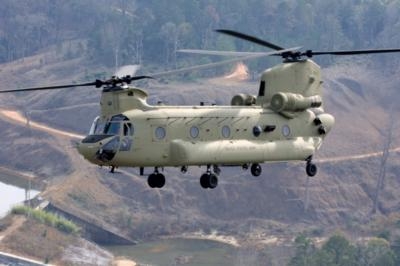
Lightweight ballistic armor is also being designed, qualified, fabricated and installed by the PIF on the CH-47 Chinook, and UH-60 Black Hawk aircraft.
The current Chinook BPS system offers protection against small arms fire and weighs 3,500 lbs. The PIF was able to take advantage of advances in light-weight composite material and to reduce the weight of the original BPS by 2,000 lbs. The new BPS offers additional protection to both the pilot and cargo areas. Also integrated into the CH-47D/F is a floor kit, a passenger vertical kit, and a Multi-Impact Transparent Armor System for windows, which allows normal operations while reducing ballistic intrusion.
The PIF-enhanced BPS for the Black Hawk will reduce the weight of the current BPS system by 500 pounds. The PIF will also deliver a Technical Data Package to the UH-60 Program Management Office, which will allow industry to compete for future BPS acquisitions.
"The PIF continues to design, develop, and install new and improved ballistic protection on aviation and ground systems," Carr said, "Their design capabilities, machine shop and advanced composites lab provide an extraordinary capability to create custom formed material BPS."
(Images provided by the U.S. Army)



 ANN's Daily Aero-Term (12.01.25): Convective SIGMET


 See All