Wed, Jun 11, 2008
Athena Technologies Brings Stricken Model Safely Back To
Earth
Rockwell Collins subsidiary Athena Technologies recently
completed a successful flight test of a significantly damaged
unmanned F/A-18 subscale model air vehicle. The Defense Advanced
Research Projects Agency (DARPA) sponsored the flight
demonstrations held this spring at the Aberdeen Proving Grounds in
Maryland.
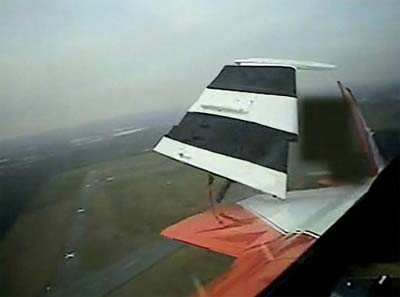
During the first flight test, nearly half of the airplane's
right wing was ejected to simulate battle damage and in-flight
failure. During the second flight, almost 60 percent of the
airplane's right wing was ejected. Upon ejecting the wing section
during both flights, Rockwell Collins' Automatic Supervisory
Adaptive Control (ASAC) technology reacted to the airplane's new
vehicle configuration, automatically regained baseline performance,
continued to fly the plane, and then autonomously landed it using
internal Inertial Navigation System/Global Positioning System
(INS/GPS) reference only.
The flight test campaign followed a similar successful DARPA
sponsored demonstration in April 2007.
As ANN reported, during that test an aileron
was ejected in-flight from the unmanned subscale F/A-18.
"DARPA asked us to significantly increase the level of damage
and risk in this latest flight test campaign to really put the
Rockwell Collins controls technology through its paces," said Mike
Myers, vice president of Business Development for Rockwell Collins
Government Systems. "We are pleased with the ability of our
adaptive controls to instantly detect and react to the new vehicle
configuration after loss of major sections of the wing. The ASAC
controls technology enabled the airplane to continue to fly
completely autonomously without a hitch and land without further
damage."
Damage tolerance is an enabling capability for increasing the
mission reliability of UAVs operating in hazardous and high-threat
environments. The technology provides for real-time autonomous
accommodation of damage, followed by an adaptation process that
alters the flight control system to compensate for the effects of
the damage. During the flight test, Rockwell Collins demonstrated a
capability that could be applicable to all military aircraft
operating in combat environments and to commercial, business and
general aviation for full flight automation and backup.
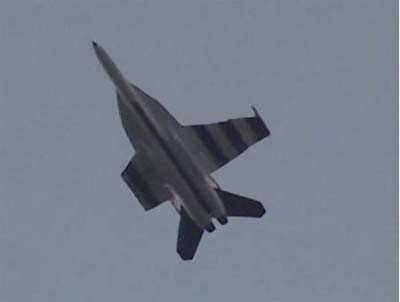
"This demonstration highlights the challenge and importance of
autonomously controlling and landing an airplane that has sustained
catastrophic damage or failure in flight," said Dr. David Vos,
senior director of Control Technologies at Rockwell Collins. "This
powerful capability can save the military the expense of lost UAVs.
When applied to both manned and unmanned aircraft, damage tolerance
is a key technology that can facilitate the convergence of manned
and unmanned aircraft in increasingly crowded controlled airspace;
but more importantly, the solution can save lives."
More News
How To Get A Story On Aero-TV News/Feature Programming How do I submit a story idea or lead to Aero-TV? If you would like to submit a story idea or lead, please contact Jim Campbel>[...]
“As the excitement builds for the world of flight returning to Oshkosh in 2026, we wanted to ensure that advance tickets are available for those who enjoy giving AirVenture t>[...]
North Atlantic High Level Airspace (NAT HLA) That volume of airspace (as defined in ICAO Document 7030) between FL 285 and FL 420 within the Oceanic Control Areas of Bodo Oceanic, >[...]
Also: Cosmonaut Kicked Out, Airbus Scales Back, AF Silver Star, Russian A-60 Clobbered A Samaritan’s Purse humanitarian flight was hijacked on Tuesday, December 2, while atte>[...]
Also: IAE Acquires Diamond Trainers, Army Drones, FedEx Pilots Warning, DA62 MPP To Dresden Tech Uni The danger to the flight training industry and our future pilots is clear. Dona>[...]



 ANN FAQ: Contributing To Aero-TV


 See All