
FAA, AMA: Do Not Fly Near Hurricane Response Efforts | Aero-News Network
Aero-News Network
RSS icon RSS feed
podcast icon MP3 podcast
Subscribe Aero-News e-mail Newsletter Subscribe

Airborne Unlimited -- Most Recent Daily Episodes

Episode Date

Airborne-Monday

Airborne-Tuesday

Airborne-Wednesday Airborne-Thursday

Airborne-Friday

Airborne On YouTube

Airborne-Unlimited-12.01.25

AirborneNextGen-
12.02.25

Airborne-Unlimited-12.03.25

Airborne-FltTraining-12.04.25

AirborneUnlimited-12.05.25

AFE 2025 LIVE MOSAIC Town Hall (Archived): www.airborne-live.net

Fri, Oct 07, 2016

FAA, AMA: Do Not Fly Near Hurricane Response Efforts

Clear Skies Needed For Recovery Efforts In Coastal States

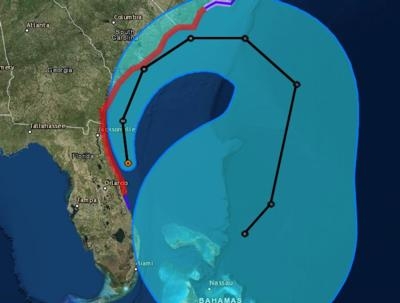
Hurricane Matthew is continuing to grind up the Florida coast, heading for Georgia, South and North Carolina. We know it will be very tempting to get aerial video of the damage caused by hurricane Matthew after the storm has passed. But the FAA and AMA are urging all drone and model aircraft hobbyists to stay clear of Hurricane Matthew recovery efforts in areas affected by the storm.

Any unauthorized drone or model aircraft operations that interfere with disaster relief efforts are subject to civil penalties of up to $32,140 per violation and possible criminal prosecution.
 
During emergency response and recovery efforts, authorized aircraft may be flying at low altitudes over the affected areas. The FAA may also place Temporary Flight Restrictions (TFRs) on certain locations around the storm. UAS operators should always check the FAA’s list of TFRs before taking to the skies and must stay clear of ongoing public safety operations at all times.
 
AMA continually shares up-to-date safety and regulatory information with its 195,000 members across the country, including email distribution of the latest TFRs. For more information on where to fly safely, including TFRs and local AMA club locations, visit the Learn sUAS Interactive Map. In addition, anyone with a smartphone can access TFR information through the FAA’s B4UFLY app.
 
"No one should be flying near disaster relief or recovery efforts, air ambulance or search-and-rescue operations unless they’re supporting those efforts,” said Dave Mathewson, executive director of AMA. “Keeping the skies clear during this critical time will help ensure that first responders can do their jobs safely.”

(Source: AMA news release. National Hurricane Center image)

FMI: https://pilotweb.nas.faa.gov, www.modelaircraft.org

Advertisement

More News

ANN's Daily Aero-Term (12.04.25): Cooperative Surveillance

Cooperative Surveillance Any surveillance system, such as secondary surveillance radar (SSR), wide-area multilateration (WAM), or ADS-B, that is dependent upon the presence of cert>[...]

ANN's Daily Aero-Linx (12.04.25)

Aero Linx: OX5 Aviation Pioneers Incorporated in 1955 as a Pa 501 (c)(3) Not for Profit Corporation, the OX5 Aviation Pioneers is dedicated to bringing before the public the accomp>[...]

NTSB Prelim: Extra Flugzeugproduktions EA 300/SC

The Pilot Appeared To Regain Control After Six Rotations And Attempted To “Fly Out” Inverted But Had Insufficient Altitude On November 8, 2025, at 1038 eastern standard>[...]

Classic Aero-TV: The Bally Bomber - The All Time Ultimate Warbird Replica?

From 2018 (YouTube Edition): Aero-News Talks With The Airplane's Builder One of the many unique airplanes at AirVenture 2018 was a 1/3-scale B-17 bomber built by Jack Bally, who ta>[...]

ANN's Daily Aero-Linx (12.05.25)

Aero Linx: Society of U.S. Army Flight Surgeons (SoUSAFS) The Society of US Army Flight Surgeons (SoUSAFS) serves to advance the science and art of Aerospace Medicine and its allie>[...]

blog comments powered by Disqus



Advertisement

Advertisement

Podcasts

Advertisement

© 2007 - 2025 Web Development & Design by Pauli Systems, LC

