Sat, Aug 03, 2019
Piper PA-31 Collided With Terrain In Kananaskis Country, Alberta
In the release of its investigation report (A18W0116), the Transportation Safety Board of Canada (TSB) found that hypoxia ... in-flight oxygen deprivation ... likely played a role in the loss of control that resulted in a fatal 2018 aircraft accident over Mount Rae, Alberta.
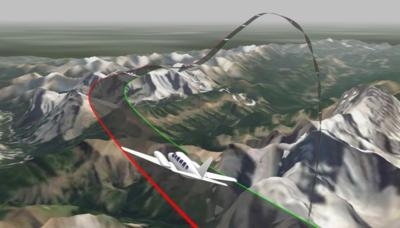
In the afternoon of 1 August 2018, after completing two hours of survey activities, an Aries Aviation International Piper PA-31 aircraft was proceeding to Calgary/Springbank Airport Alberta (CYBW), at 15,000 feet above sea level (ASL), with a pilot and a survey technician on board. Approximately 40 nautical miles southwest of the airport, air traffic control began sequencing the aircraft for arrival into the Calgary airspace. At this time, for reasons that could not be determined, the right engine began operating at a significantly lower power setting than the left engine. About 90 seconds later, at approximately 13,500 feet, the aircraft departed controlled flight. The aircraft collided with terrain near the summit of Mount Rae at 13:36 (MDT). The pilot and survey technician were both fatally injured.
The investigation determined that, although a portable oxygen system was activated and available, the pilot was not continuously using oxygen while the aircraft was above 13,000 feet ASL, as required by regulation, and likely became hypoxic. Although hypoxia can cause pronounced performance degradations, its onset can be slow and gradual, making it likely the pilot did not recognize the symptoms, and thus took no action to restore his supply of oxygen. The investigation also found that if flight crews do not undergo practical hypoxia training, there is a risk they will not recognize its onset when flying above 13 000 feet without continuous use of supplemental oxygen.
The aircraft was not equipped with a flight data recorder or cockpit voice recorder, nor were these required by regulation. However, the aircraft was equipped with a flight data monitoring system that included a camera. This system provided significant information to help TSB investigators better understand the underlying factors that contributed to the accident.
(Source: TSB news release. Image from TSB Report)
More News
From 2023 (YouTube Edition): Germany’s Best by Way of Florida Established in 1980 by German aerobatic pilot Walter Extra as a means by which to design and develop his own air>[...]
Get The Latest in Aviation News NOW on Instagram Are you on Instagram yet? It's been around for a few years, quietly picking up traction mostly thanks to everybody's new obsession >[...]
“Achieving PMA for the S-1200 Series magnetos is another step in expanding our commitment to providing the aviation community with the most trusted and durable ‘firewal>[...]
Ultralight Vehicle A single-occupant aeronautical vehicle operated for sport or recreational purposes which does not require FAA registration, an airworthiness certificate, or pilo>[...]
Aero Linx: The de Havilland Moth Club Ltd The de Havilland Moth Club evolved from a belief that an association of owners and operators of Moth aeroplanes should be formed to create>[...]



 Classic Aero-TV: Extra; the Airplane, the Man, and His Grand DeLand Plan


 See All