
Airbus Denies Cover-Up In AAL 587 Crash | Aero-News Network
Aero-News Network
RSS icon RSS feed
podcast icon MP3 podcast
Subscribe Aero-News e-mail Newsletter Subscribe

Airborne Unlimited -- Most Recent Daily Episodes

Episode Date

Airborne-Monday

Airborne-Tuesday

Airborne-Wednesday Airborne-Thursday

Airborne-Friday

Airborne On YouTube

Airborne-Unlimited-12.08.25

AirborneNextGen-
12.09.25

Airborne-Unlimited-12.10.25

Airborne-AffordableFlyers-12.11.25

AirborneUnlimited-12.05.25

AFE 2025 LIVE MOSAIC Town Hall (Archived): www.airborne-live.net

Thu, May 29, 2003

Airbus Denies Cover-Up In AAL 587 Crash

Victims' Families Say 2001 Disaster Could Have Been Averted

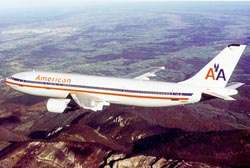
Did Airbus know of major problems with the rudder on its A300-600 model, yet fail to tell anyone? That's the allegation from families suing for up to $100 million in damages, as American and Airbus point fingers at each other, each denying blame for the crash.

Airbus says the crash of AAL 587 was due to pilot error. American says Airbus failed to warn customers that strong, sudden rudder inputs could cause a structural overload and lead to a tragic airframe failure.

What Did Airbus Know About Other, Similar Incidents?

Consider this similar event:

1997: Off the coast of Florida, AAL 903, stalled, descending some 3000 feet before the flight crew, using very sharp rudder inputs, were able to bring the aircraft back under control. In the process, American says, they damaged the Airbus's vertical stabilizer. The NTSB blamed the pilots for the incident, saying they were flying much too close to stall speed when it all unraveled. That, say some safety experts, should have been a red light and siren to the folks over at Airbus.

Bernard Loeb, former NTSB Chief, told USA Today earlier this week, "When I heard (about what Airbus knew) it made me sick. People are kicking themselves." Carol Carmody, who was head of the NTSB when Airbus reported the 1997 incident, said the board missed a chance to take preventative action before the AAL 587 crash in 2001.

The results of the Flight 587 investigation are still months away. But already, the NTSB reports the A300 ran into heavy turbulence soon after take-off, as it was passing over Jamaica Bay (NY). Copilot Sten Molin fought the rough air by strong rudder control inputs.

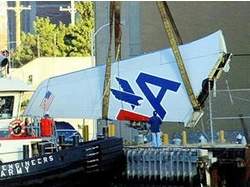
The vertical stab then broke away from the aircraft and aerodynamic control was lost.

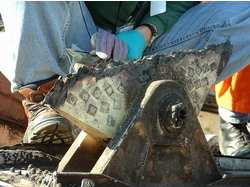
The investigation has so far found that there were no structural defects in the tail of the A300. Initial reports indicate Molin's maneuvers simply exceeded the maximum structural capabilities of the vertical stabilizer itself.

FMI: www.airbus.com

Advertisement

More News

ANN's Daily Aero-Term (12.08.25): Decision Altitude (DA)

Decision Altitude (DA) A specified altitude (mean sea level (MSL)) on an instrument approach procedure (ILS, GLS, vertically guided RNAV) at which the pilot must decide whether to >[...]

ANN's Daily Aero-Linx (12.08.25)

Aero Linx: T-34 Association, Inc. The T-34 Association was formed in July 1975 so that individuals purchasing then military surplus T-34As had an organization which would provide s>[...]

NTSB Final Report: Piper PA-31T3

As He Released The Brakes To Begin Taxiing, The Brake Pedals Went To The Floor With No Braking Action Analysis: The pilot reported that during engine start up, he applied the brake>[...]

Aero-News: Quote of the Day (12.08.25)

“Legislation like the Mental Health in Aviation Act is still imperative to hold the FAA accountable for the changes they clearly acknowledge need to be made... We cannot wait>[...]

Airborne-Flight Training 12.04.25: Ldg Fee Danger, Av Mental Health, PC-7 MKX

Also: IAE Acquires Diamond Trainers, Army Drones, FedEx Pilots Warning, DA62 MPP To Dresden Tech Uni The danger to the flight training industry and our future pilots is clear. Dona>[...]

blog comments powered by Disqus



Advertisement

Advertisement

Podcasts

Advertisement

© 2007 - 2025 Web Development & Design by Pauli Systems, LC

