Thu, Apr 12, 2012
New-Engine Variant To Offer Customers Substantial Fuel Savings In 2017
Boeing said Wednesday it has made a series of design updates to the 737 MAX to further optimize the new-engine variant's performance. "The 737 MAX is on-track to deliver substantial fuel-savings to customers starting in 2017," said Beverly Wyse, vice president and general manager, 737 program. "We've made several design decisions that support the performance targets for the MAX and evolve the Next-Generation 737's design within the scope of the 737 MAX program."
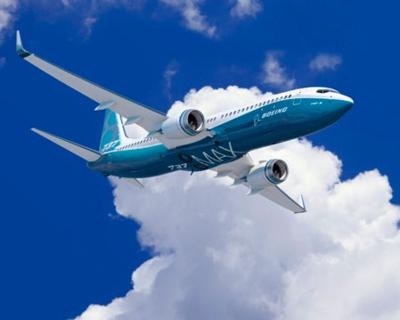
Those design decisions include:
- Aft body aerodynamic improvements: The tail cone will be extended and the section above the elevator thickened to improve steadiness of air flow. This eliminates the need for vortex generators on the tail. These improvements will result in less drag, giving the airplane better performance.
- Engine installation: The new CFM International LEAP-1B engines will be integrated with the wing similar to the aerodynamic lines of the 787 Dreamliner engine with its wing. A new pylon and strut, along with an 8-inch nose gear extension, will maintain similar ground clearance to today's 737 while accommodating the larger engine fan. The nose gear door design is altered to fit with this revision.
- Flight control and system updates: The flight controls will include fly-by-wire spoilers, which will save weight by replacing a mechanical system. The MAX also will feature an electronic bleed air system, allowing for increased optimization of the cabin pressurization and ice protection systems, resulting in better fuel burn.
Other minor changes to the airplane include strengthening the main landing gear, wing and fuselage to accommodate the increase in loads due to the larger engines. Boeing will continue to conduct aerodynamic, engine and airplane trade studies as the team works to optimize the design of the airplane by mid-2013.
"We also continue to do work in the wind tunnel to affirm the low- and high-speed performance of the 737 MAX design," said Michael Teal, chief project engineer and deputy program manager, 737 MAX program. "Based on design work and preliminary testing results, we have even more confidence in our ability to give our customers the fuel savings they need while minimizing the development risk on this program."
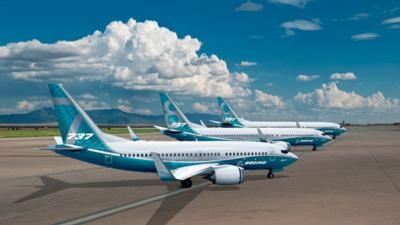
A possible revision to the wing tips on the MAX also is being tested in the wind tunnel to see if this new technology could further benefit the airplane. "Any new technology incorporated into the MAX design must offer substantial benefit to our customers with minimal risk for the team to pursue it," said Teal. "On the 737 MAX we are following our disciplined development process and continue to work on an airplane configuration that will provide the most value for our customers."
Boeing estimates that airlines operating the 737 MAX will see a 10-12 percent fuel-burn improvement over today's most fuel efficient single-aisle airplanes and a 7 percent operating cost per-seat advantage over tomorrow's competition. (Images Boeing artists' concepts)
More News
Light Gun A handheld directional light signaling device which emits a brilliant narrow beam of white, green, or red light as selected by the tower controller. The color and type of>[...]
“We have performed extensive ground testing by comparing warm up times, full power tethered pulls, and overall temperatures in 100 degree environments against other aircraft >[...]
While Taxiing To Parking The Right Landing Gear Leg Collapsed, Resulting In Substantial Damage Analysis: The pilot made a normal approach with full flaps and landed on the runway. >[...]
From 2014 (YouTube Edition): Exotic Rebuild Reveals Aerial Work Of Art During EAA AirVenture 2014, ANN's Michael Maya Charles took the time to get a history lesson about a great ai>[...]
Also: Project Talon, McFarlane Acquisition, Sky-Tec Service, JPL Earth Helo Tests Bombardier has earned a round of applause from the business aviation community, celebrating the fo>[...]



 ANN's Daily Aero-Term (12.13.25): Light Gun


 See All