

Foam Didn't Concern Columbia Crew | Aero-News Network
Aero-News Network
RSS icon RSS feed
podcast icon MP3 podcast
Subscribe Aero-News e-mail Newsletter Subscribe

Airborne Unlimited -- Most Recent Daily Episodes

Episode Date

Airborne-Monday

Airborne-Tuesday

Airborne-Wednesday Airborne-Thursday

Airborne-Friday

Airborne On YouTube

Airborne-Unlimited-12.08.25

AirborneNextGen-
12.09.25

Airborne-Unlimited-12.10.25

Airborne-AffordableFlyers-12.11.25

AirborneUnlimited-12.12.25

AFE 2025 LIVE MOSAIC Town Hall (Archived): www.airborne-live.net

Wed, Jul 02, 2003

Foam Didn't Concern Columbia Crew

They Were Aware of Foam, Not of Any Danger

"Experts have reviewed the high speed photography and there is no concern for RCC or tile damage. We have seen the same phenomenon on several other flights and there is absolutely no concern for entry. That is all for now. It's a pleasure working with you every day."

That's one e-mail that Columbia's commander, Rick D. Husband, and pilot, William C. McCool (pictured) were happy to have received during the doomed shuttle's flight. It was written as part of then-private correspondence, by flight director "Steve" Stich. NASA explains that the correspondence wasn't "official."

The pilots liked it, though. Rick Husband replied two days later, again on a "personal" level, "Thanks a million, Steve! And thanks for the great work on your part."

Regardless Stich's happy note, NASA has since revealed that there was an ongoing debate on the ground, as to whether the foam collision could have precipitated a calamity.

The consensus was that, while the possibility was there, previous similar-looking contacts produced only minor damage; and certainly, the mission and the crew were not in any danger.

Later, NASA as much as said that, even if catastrophic damage had been suspected (it was not), there was little that could have been done, on that mission, to save the crew.

Later, NASA said that, had they really thought the safety of the crew were in danger, there might have been some herculean efforts that could have been employed. Some of those possible efforts are now being explored, as backups for future shuttle missions.

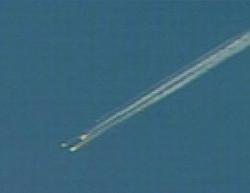
Columbia disintegrated February 1, 2003, on re-entry, at about 13,000 miles per hour, over Texas. All seven aboard were killed. Many e-mails, including previously-private correspondence, have been released to the site below.

FMI: www.jsc.nasa.gov/news/columbia/107_emails/foamemails.doc; www.caib.us

Advertisement

More News

ANN's Daily Aero-Linx (12.12.25)

Aero Linx: Commercial Aviation Safety Team (CAST) Founded in 1997, the Commercial Aviation Safety Team (USCAST) has developed an integrated, data-driven strategy to reduce the comm>[...]

ANN's Daily Aero-Term (12.12.25): Land And Hold Short Operations

Land And Hold Short Operations Operations that include simultaneous takeoffs and landings and/or simultaneous landings when a landing aircraft is able and is instructed by the cont>[...]

ANN FAQ: How Do I Become A News Spy?

We're Everywhere... Thanks To You! Even with the vast resources and incredibly far-reaching scope of the Aero-News Network, every now and then a story that should be reported on sl>[...]

NTSB Final Report: Cirrus Design Corp SF50

Pilot’s Inadvertent Use Of The Landing Gear Control Handle Instead Of The Flaps Selector Switch During The Landing Rollout Analysis: The pilot reported that during the landin>[...]

Airborne 12.08.25: Samaritan’s Purse Hijack, FAA Med Relief, China Rocket Fail

Also: Cosmonaut Kicked Out, Airbus Scales Back, AF Silver Star, Russian A-60 Clobbered A Samaritan’s Purse humanitarian flight was hijacked on Tuesday, December 2, while atte>[...]

blog comments powered by Disqus



Advertisement

Advertisement

Podcasts

Advertisement

© 2007 - 2025 Web Development & Design by Pauli Systems, LC

