Fri, Nov 22, 2019
Skydweller Aero Is Developing The World's First Solar-Powered Drone Capable Of Perpetual Flight With Heavy Payloads
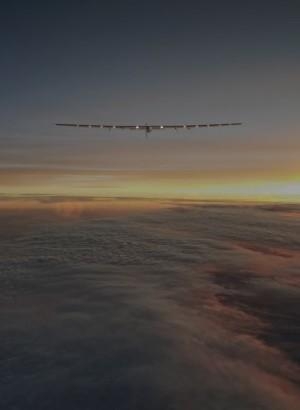
Leonardo is accelerating the progress of technology and innovation in autonomous flight by investing in Skydweller Aero Inc., a U.S./Spanish start-up specializing in large-scale solar-powered unmanned air systems. The initiative will result in the development and deployment of the Skydweller drone, the world’s first fully electric unmanned aircraft capable of carrying large payloads with unlimited range and ultra-persistent endurance.
"As the key technological investor and partner of the project, Leonardo will broaden its capabilities in new power systems, autonomous flight, innovative aerostructures, ultra-light materials and eco-friendly technologies to improve the company's competitive advantage in the aerospace business for the next 20 years," said Alessandro Profumo, CEO of Leonardo.
Thanks to its unique features, Skydweller combines potentially unlimited persistence and range with the flexibility of an aircraft. It will operate from existing airbases around the world, deploy thousands of miles away to areas of high need, and remain overhead for orders of magnitude longer than current aircraft. This revolutionary platform will be used for purposes ranging from land and maritime surveillance to monitoring the environment and infrastructure, from industrial geo-information services to telecommunications and precision navigation. During emergencies and disaster-recovery situations, the system can be rapidly deployed from distant locations to provide backup communications and direct support to first responders.
The Skydweller project builds on a proven and mature aircraft that successfully circumnavigated the globe in 2016. The first phase focuses on converting the aircraft from a manned platform into an Optionally-Piloted Vehicle (OPV) by integrating advanced autonomy algorithms and vehicle management systems. The second step of the project will culminate in the first production aircraft, designed solely for unmanned operations and hardened against a range of environmental conditions. Autonomous flights of the OPV are projected for 2020 and the first production model of the unmanned version of the aircraft is expected in 2021.
The system will comply with European export laws and will not be subject to International Traffic in Arms Regulations (ITAR) restrictions. This will enable the aircraft to satisfy government and commercial needs around the world. Leonardo will act as the prime contractor for commercial opportunities in Italy, the United Kingdom, Poland and NATO.
Development and construction of the aircraft will be carried out at the Skydweller facility in the Castilla-La Mancha region of Spain. Leonardo Aircraft division will participate in development and engineering activities via a dedicated team.
(Image provided with Leonardo news release)
More News
How To Get A Story On Aero-TV News/Feature Programming How do I submit a story idea or lead to Aero-TV? If you would like to submit a story idea or lead, please contact Jim Campbel>[...]
“As the excitement builds for the world of flight returning to Oshkosh in 2026, we wanted to ensure that advance tickets are available for those who enjoy giving AirVenture t>[...]
North Atlantic High Level Airspace (NAT HLA) That volume of airspace (as defined in ICAO Document 7030) between FL 285 and FL 420 within the Oceanic Control Areas of Bodo Oceanic, >[...]
Also: Cosmonaut Kicked Out, Airbus Scales Back, AF Silver Star, Russian A-60 Clobbered A Samaritan’s Purse humanitarian flight was hijacked on Tuesday, December 2, while atte>[...]
Also: IAE Acquires Diamond Trainers, Army Drones, FedEx Pilots Warning, DA62 MPP To Dresden Tech Uni The danger to the flight training industry and our future pilots is clear. Dona>[...]



 ANN FAQ: Contributing To Aero-TV


 See All