Thu, May 03, 2007
Board Says "Critical Safety Issue" Exists With TCAS
 In response to last year's midair
collision over Brazil involving a private Embraer Legacy 600
business jet, and a Gol Airlines 737, on Wednesday the National
Transportation Safety Board issued three safety recommendations
geared at solving what the Board calls a "critical safety issue"
when traffic collision avoidance systems (TCAS) fail, without the
flight crew's knowledge.
In response to last year's midair
collision over Brazil involving a private Embraer Legacy 600
business jet, and a Gol Airlines 737, on Wednesday the National
Transportation Safety Board issued three safety recommendations
geared at solving what the Board calls a "critical safety issue"
when traffic collision avoidance systems (TCAS) fail, without the
flight crew's knowledge.
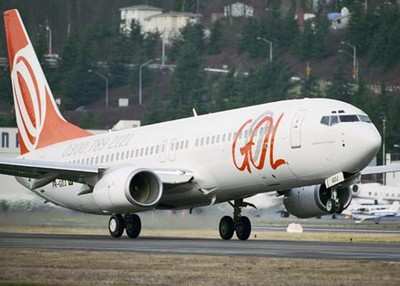
As Aero-News reported, Gol
Airlines flight 1907 plunged into a thickly-jungled region
September 30, about 18 miles from Peixoto de Azevedo, Brazil. All
154 persons onboard the 737-800 were killed; the pilots of the
Embraer were able to make an emergency landing following the
collision.
The NTSB noted the bizjet's transponder was not being received
by ATC radar prior to the collision... and such a failure could
have compromised safety alerts in the cockpits of both
aircraft.
"The investigation of this accident is ongoing," the NTSB states
in its report, "however, preliminary findings suggest that a
critical safety issue exists regarding the loss of functionality of
an aircraft’s collision avoidance system (comprising a
transponder and a traffic alert and collision avoidance system
[TCAS] and resulting cockpit warnings to flight crews. Flight data
recorder (FDR) and cockpit voice recorder (CVR) information from
both airplanes revealed no indication of any TCAS alert on board
either airplane (both airplanes were equipped with mode S
transponders and TCAS II computer units), no evidence of
pre-collision visual acquisition by either flight crew, and no
evidence of evasive action by either crew."
To address the possibility a failed or inoperable transponder
may compromise TCAS warnings, the NTSB issued the following
recommendations:
- Require, for all aircraft required to have a traffic alert and
collision avoidance system installed and for existing and future
system designs, that the airborne loss of collision avoidance
system functionality, for any reason, provide an enhanced aural and
visual warning requiring pilot acknowledgment. (A-07-35)
- Evaluate the feasibility of providing enhanced aural and visual
warnings for future systems that may provide ground collision
avoidance functionality. If feasible, require that future design
criteria include such warning functionality. (A-07-36)
- Inform all pilots who use transponders or transponder/traffic
alert and collision avoidance system (TCAS) units about the
circumstances of this accident and the lack of a conspicuous
warning to indicate the loss of collision protection resulting from
a compromise in functionality of either the transponder or TCAS
unit and ask all pilots who use transponders or transponder/TCAS
units to become familiar with the annunciations currently used to
indicate failure or lack of active functionality of these
components. (A-07-37)
More News
The Airplane Made An Uncommanded Right Yaw And Roll, And He Was Unable To Maintain Control Of The Airplane On November 11, 2025, about 1750 central standard time, a Cirrus SR20, N8>[...]
Aero Linx: Florida Antique Biplane Association "Biplanes.....outrageous fun since 1903." That quote really defines what the Florida Antique Biplane Association (FABA) is all about.>[...]
Wind Shear Escape An unplanned abortive maneuver initiated by the pilot in command (PIC) as a result of onboard cockpit systems. Wind shear escapes are characterized by maximum thr>[...]
“Working closely with the Polish Armed Forces, we’re focused on disciplined execution to help enhance Poland’s defense capabilities and keep up with the strong de>[...]
Also: Bell 505 on SAF, NYPA Gets Flak For BizAv 'Abuse', FAA Venezuela Caution, Horizon Update Textron Aviation has confirmed it will be ending production of the Beechcraft Bonanza>[...]



 NTSB Prelim: Cirrus Design Corp SR20


 See All