Sat, Jun 07, 2003
NATA Leads Fight To Reopen Reagan National To Non-Scheduled
Commercial Flights
 It looks like progress. National Air
Transportation Association (NATA) president James K. Coyne Friday
said the association's efforts to re-open Ronald Reagan Washington
National Airport (DCA) to non-scheduled commercial air carrier
flights (charters) were beginning to show signs of success.
The centerpiece of the association's efforts is a petition filed
with the Federal Aviation Administration on March 13, 2003, seeking
a rulemaking to determine the conditions under which charter
flights could once again use the airport.
It looks like progress. National Air
Transportation Association (NATA) president James K. Coyne Friday
said the association's efforts to re-open Ronald Reagan Washington
National Airport (DCA) to non-scheduled commercial air carrier
flights (charters) were beginning to show signs of success.
The centerpiece of the association's efforts is a petition filed
with the Federal Aviation Administration on March 13, 2003, seeking
a rulemaking to determine the conditions under which charter
flights could once again use the airport.
A Bit Of Recent History
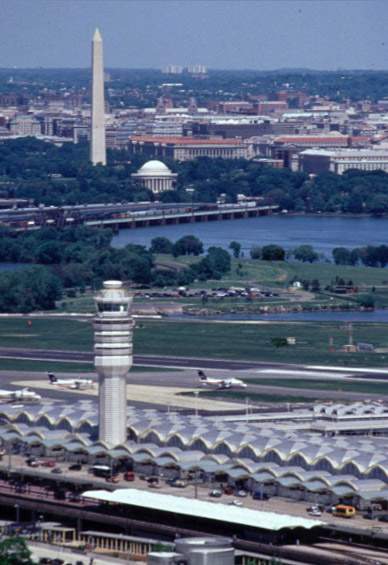
In the immediate aftermath of the September 11, 2001, terrorist
attacks, DCA was closed to all aircraft operations, scheduled and
non-scheduled. Gradually and as enhanced security
requirements have been met, airline service has been restored at
the airport to the point that DCA is operating at approximately 75
percent of its previous capacity for scheduled operations.
Non-scheduled operations, however, remain banned at the facility
despite numerous requests to use existing or similar security
practices currently followed by airlines.
"Re-opening National Airport to charter flights is one of the
association's highest priorities," Coyne said in reviewing the
organization's work to-date. "With government security
programs for charter aircraft making their security equivalent to
the scheduled airlines, all that remains is for the additional
measures necessary for operations at DCA to be applied to
non-scheduled flights. Many in Congress agree that it's time
these steps were taken and the airport opened to operators who can
comply with these more stringent requirements."
Support From Congress
Coyne said he has been meeting with aviation policy leaders on
Capitol Hill and throughout the various government agencies which
play a security role. As a direct result of the association's
efforts, numerous members of Congress have written President Bush
to request exactly what NATA's petition seeks: A set of security
and procedural rules for flying to and from DCA equivalent to those
imposed on the airlines using that facility.
"When we began our efforts in March, we knew we had a tough
fight ahead of us," Coyne said. "I'm very gratified with the
support we have received and the actions that have been
taken. In addition to the various communications from
Congress to the administration, a provision in a House aviation
security bill would mandate the same kind of rulemaking sought in
our petition. That's real progress, but we're not finished
yet."
More News
Local Airport Advisory (LAA) A service available only in Alaska and provided by facilities that are located on the landing airport, have a discrete ground-to-air communication freq>[...]
Also: Cosmonaut Kicked Out, Airbus Scales Back, AF Silver Star, Russian A-60 Clobbered A Samaritan’s Purse humanitarian flight was hijacked on Tuesday, December 2, while atte>[...]
Aero Linx: Michigan Helicopter Association (MHA) The Michigan Helicopter Association (MHA) exists to bring together people who share an interest in helicopters, including private, >[...]
Also: Airbus Acquisition, USCG Helo Sniper, Remember Pearl Harbor, New Thunderbird 1 Gulfstream’s newest addition to its next-gen lineup, the super-midsize G300, is officiall>[...]
Also: Electra Goes Military, Miami Air Taxi, Hypersonics Lab, MagniX HeliStrom Amazon’s Prime Air drones are back in the spotlight after one of its newest MK30 delivery drone>[...]



 ANN's Daily Aero-Term (12.14.25): Local Airport Advisory (LAA)


 See All