Fri, Feb 21, 2014
'Hurricane Hunter' Aircraft Will Be First To Fly The Upgraded Engine
Rolls-Royce has completed assembly and ground testing of the first enhanced T56 engine for the National Oceanic Atmospheric Administration (NOAA) WP-3D aircraft, demonstrating fuel use reduction over 13 per cent.
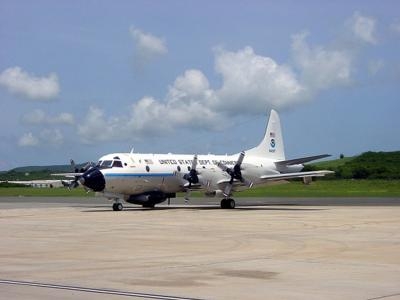
NOAA's "Hurricane Hunters" will be the first aircraft to fly the Rolls-Royce T56 engine enhancement, known as the Series 3.5. While C-130 flight tests and engine ground tests have shown significant improvement over requirements, the Series 3.5 package requirements call for a 7.9 per cent fuel reduction.
Rolls-Royce and the US Air Force (USAF) have also started planning discussions for the introduction of the Series 3.5 into its fleet of C-130s. Initial funding of $15.7 million for the engine enhancement package was approved by Congress last month, launching the technology insertion for the USAF, Air Force Reserve and Air National Guard fleets.
In addition to reduced fuel consumption, the enhancement package allows T56 engines to operate at significantly lower turbine temperatures, extending parts life and improving reliability by 22 percent. "The T56 Series 3.5 engine enhancement has demonstrated significant fuel savings and we have now started discussions to insert this technology improvement into the US Air Force transport fleet," said Tom Bell, Rolls-Royce, President Defense. "A USAF study concluded this innovative technology would save the service $2 billion and extend the life of the fleet for decades."
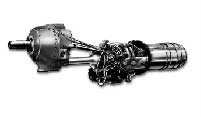
The P-3 Series 3.5 flight test and qualification program, supported by Lockheed Martin, is planned to be completed later this year. The first fully equipped NOAA WP-3D aircraft with Series 3.5 enhancements is expected to enter service beginning in early 2015. The engine enhancement package is in the final stages of completing all requirements for US Air Force qualification on the C-130 and recently received FAA certification for the commercial version of the T56 engine. Deliveries of the new engine enhancement packages to the Air Force are expected to begin in 2016.
The T56 Series 3.5 engine enhancement can be installed as part of a conventional engine overhaul, and does not require any aircraft or engine control system modifications. In addition to USAF and NOAA, international operators of C-130 and P-3 aircraft are also considering incorporating the T56 engine enhancement into their fleets.
(Image provided by Rolls Royce)
More News
From 2023 (YouTube Edition): "Ain’t Your Daddy’s Super Cub”—Don Wade Co-owned by Don and Ron Wade—the former of Don’s Dream Machines, a storied >[...]
Pilot-Rated Passenger Reported That The Pilot Did Not Adequately “Round Out” The Landing Flare And The Airplane Bounced And Yawed To The Right Analysis: The pilot state>[...]
Dead Reckoning Dead reckoning, as applied to flying, is the navigation of an airplane solely by means of computations based on airspeed, course, heading, wind direction, and speed,>[...]
Aero Linx: Lake Amphibian Club This website is created and sponsored by the Lake Amphibian Club, to help spread the word about these wonderful, versatile amphibians that can land j>[...]
“I am deeply honored to be sworn in as NASA administrator. NASA’s mission is as imperative and urgent as ever — to push the boundaries of human exploration, ignit>[...]



 Classic Aero-TV: In Praise of Alabamas Patriot Aircraft USA


 See All