
NASA Set For New Round Of J-2X Testing At Stennis Space Center | Aero-News Network
Aero-News Network
RSS icon RSS feed
podcast icon MP3 podcast
Subscribe Aero-News e-mail Newsletter Subscribe

Airborne Unlimited -- Most Recent Daily Episodes

Episode Date

Airborne-Monday

Airborne-Tuesday

Airborne-Wednesday Airborne-Thursday

Airborne-Friday

Airborne On YouTube

Airborne-Unlimited-12.08.25

AirborneNextGen-
12.09.25

Airborne-Unlimited-12.10.25

Airborne-AffordableFlyers-12.11.25

AirborneUnlimited-12.12.25

AFE 2025 LIVE MOSAIC Town Hall (Archived): www.airborne-live.net

Fri, Feb 15, 2013

NASA Set For New Round Of J-2X Testing At Stennis Space Center

Engine To Provide Thrust For The Heavy-Lift SLS

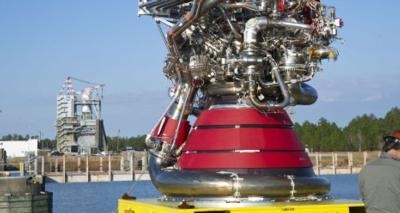
NASA's progress toward a return to deep space missions continues with a new round of upcoming tests on the next-generation J-2X rocket engine, which will help power the agency's Space Launch System (SLS). Beginning this month, engineers will conduct a series of tests on the second J-2X development engine, designated number 10002, on the A-2 Test Stand at NASA's Stennis Space Center in Mississippi. Once the series is completed, the engine will be transferred to the A-1 Test Stand to undergo a series of gimbal, or pivot, tests for the first time.

"The upcoming test series is not only a critical step forward, but important to the Stennis test team, as well," said Gary Benton, manager of the J-2X test project at Stennis. "This test series will help us increase our knowledge of the J-2X and its performance capabilities. In addition, the series will help us maintain the high skill level of our team as we look ahead to continued J-2X testing and testing of the RS-25 engines that will be used to power the SLS first-stage."

The first objective of the testing is to verify and demonstrate the engine's capability. Data from what is known as hot-fire engine tests will be compared to the performance of the first engine. Engineers also will vary liquid hydrogen and liquid oxygen inlet pressures and subject the engine nozzle to higher temperatures than in previous tests to see what effect they have on performance.

NASA already has conducted successful tests on engine number 10001 and on the J-2X powerpack assembly. In total, 34 tests were conducted on the J-2X engine and powerpack, with the J-2X achieving a full flight-duration firing of 500 seconds in the eighth test, earlier than any rocket engine in U.S. history. The engine is being designed and built by NASA and Pratt & Whitney Rocketdyne to power the upper stage of the 143-ton version of the SLS rocket.

The SLS will launch NASA's Orion spacecraft and other payloads from the agency's Kennedy Space Center in Florida.

(Image provided by NASA)

FMI: www.nasa.gov/sls

Advertisement

More News

ANN's Daily Aero-Linx (12.12.25)

Aero Linx: Commercial Aviation Safety Team (CAST) Founded in 1997, the Commercial Aviation Safety Team (USCAST) has developed an integrated, data-driven strategy to reduce the comm>[...]

ANN's Daily Aero-Term (12.12.25): Land And Hold Short Operations

Land And Hold Short Operations Operations that include simultaneous takeoffs and landings and/or simultaneous landings when a landing aircraft is able and is instructed by the cont>[...]

ANN FAQ: How Do I Become A News Spy?

We're Everywhere... Thanks To You! Even with the vast resources and incredibly far-reaching scope of the Aero-News Network, every now and then a story that should be reported on sl>[...]

NTSB Final Report: Cirrus Design Corp SF50

Pilot’s Inadvertent Use Of The Landing Gear Control Handle Instead Of The Flaps Selector Switch During The Landing Rollout Analysis: The pilot reported that during the landin>[...]

Airborne 12.08.25: Samaritan’s Purse Hijack, FAA Med Relief, China Rocket Fail

Also: Cosmonaut Kicked Out, Airbus Scales Back, AF Silver Star, Russian A-60 Clobbered A Samaritan’s Purse humanitarian flight was hijacked on Tuesday, December 2, while atte>[...]

blog comments powered by Disqus



Advertisement

Advertisement

Podcasts

Advertisement

© 2007 - 2025 Web Development & Design by Pauli Systems, LC

