Sat, Sep 12, 2020
AD 2020-18-51 Requires Revising The Existing Airplane Flight Manual (AFM)
The FAA is adopting a new airworthiness directive (AD) for certain Sandia attitude indicators (attitude indicators). This AD was sent previously to all known U.S. owners and operators of aircraft with these attitude indicators installed.
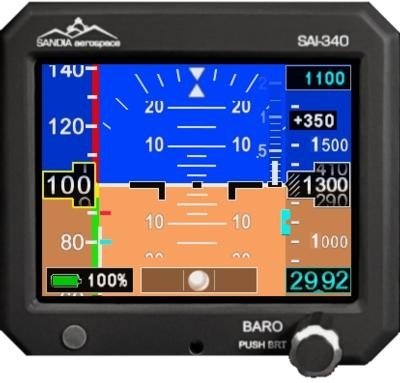
This AD requires revising the existing Airplane Flight Manual (AFM) for your airplane to prohibit operation under instrument flight rules (IFR) or night visual flight rules (VFR) and prohibit coupling the autopilot with an affected attitude indicator. This AD was prompted by reports of 54 failed attitude indicators. The FAA is issuing this AD to address the unsafe condition on these products. This AD is effective September 28, 2020 to all persons except those persons to whom it was made immediately effective by Emergency AD 2020-18-51, issued on August 28, 2020, which contains the requirements of this AD.
Supplementary Information: On August, 28, 2020, the FAA issued Emergency AD 2020-18-51 (Emergency AD 2020-18-51) for attitude indicator part number (P/N) 306171-10 or 306171-20. Emergency AD 2020-18-51 requires revising the existing AFM for your airplane to prohibit operation under IFR or night VFR and prohibit coupling the autopilot with an affected attitude indicator. These part-numbered attitude indicators may be marked as BendixKing Model KI-300 or Sandia Model SAI-340A.
Emergency AD 2020-18-51 was prompted by a report of three failed attitude indicator P/N 306171-10 units. Following the initial report, an investigation revealed a total of 54 failed attitude indicator P/N 306171-10 units. Attitude indicator P/N 306171-20 is affected by the same unsafe condition because it is identical to P/N 306171-10. The effect of the failure was erroneous attitude data provided to the pilot and autopilot, if equipped. In some instances, the pilot is unaware that the data is erroneous or unreliable. In other instances, where the aircraft is equipped with multiple displays, the pilot may be provided with conflicting information, but will have no way to determine which display contains the correct data.
This condition, if not addressed, could result in aeronautical decision-making based on erroneous attitude information, which may result in loss of control of the aircraft.
More News
Aero Linx: The American Society of Aerospace Medicine Specialists (ASAMS) The Society is a non-profit organization created to serve as a voice for and represent the professional ne>[...]
Class C Service This service provides, in addition to basic radar service, approved separation between IFR and VFR aircraft, and sequencing of VFR aircraft, and sequencing of VFR a>[...]
Have A Story That NEEDS To Be Featured On Aero-News? Here’s How To Submit A Story To Our Team Some of the greatest new stories ANN has ever covered have been submitted by our>[...]
Also: ERAU Uses UAVs, P550 Group 2 UAS, Starship’s Florida Launches, NASA Missions Chopped The Air Force has put out a call to commission a one-to-one copy of the Iranian-des>[...]
Classic Klyde Morris From 11.07.16 (and Remembering Bob...) FMI: www.klydemorris.com>[...]



 ANN's Daily Aero-Linx (08.27.25)

 See All