Tue, Dec 02, 2025
Spacecraft’s First Mission Faced Tech Issues that Stranded Astronauts for Months
NASA and Boeing have agreed to rethink the Starliner spacecraft’s future role in the commercial program after its debut crewed mission in June 2024 went sideways, leaving astronauts on the ISS for 278 days longer than planned. Starliner’s next mission is now slated for April 2026, this time with no one on board.
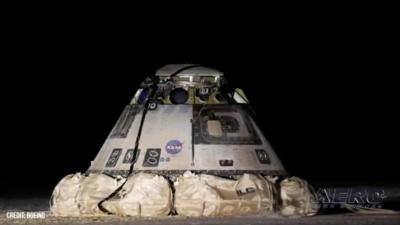
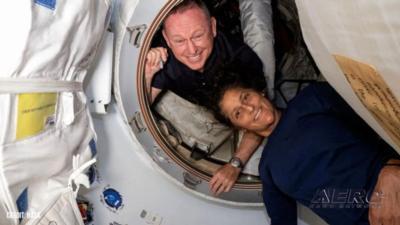
The decision follows the flight that stranded NASA astronauts Barry Wilmore and Sunita Williams on the International Space Station for around nine months due to a mishmash of propulsion issues, including helium leaks and multiple thruster failures. With confidence in the vehicle’s ability to get them home safely plummeting, Starliner flew home uncrewed and handed the crew off to a SpaceX Crew Dragon from another mission.
Starliner’s next mission, scheduled for next April, will be uncrewed and focused on validation. This serves as a temporary demotion to gather data from end-to-end tests of propulsion updates, thruster redundancy improvements, and fault-detection systems. If all goes well, however, NASA says the spacecraft may take on another 2026 flight and resume astronaut flights later on… though no one is rushing to make commitments.
Originally, Boeing was contracted to fly up to six operational crew missions for NASA. That ceiling has been cut to four, with two additional flights available only as optional add-ons. The trimmed schedule follows years of technical delays and repeated redesigns that have left Boeing well behind its commercial crew counterpart.
Meanwhile, Boeing’s commercial crew counterpart has taken over the program for all intents and purposes. SpaceX first flew astronauts for NASA in 2020 and quickly became the agency’s workhorse, performing regular flights without major interruption. That reliability gap has not gone unnoticed, especially as NASA plans to retire the ISS around 2030 and maintains a steady cadence of two astronaut missions per year. Starliner’s slow progress, on the other hand, has raised concerns about relying too heavily on a single provider.
More News
Convective SIGMET A weather advisory concerning convective weather significant to the safety of all aircraft. Convective SIGMETs are issued for tornadoes, lines of thunderstorms, e>[...]
Aero Linx: United Flying Octogenarians WELCOME to a most extraordinary group of aviators, the United Flying Octogenarians (UFO). Founded in 1982 with just a handful of pilots, we h>[...]
Pilot’s Decision To Attempt Takeoff With Frost Covering The Airplane’s Wings Analysis: The pilot of the light sport airplane was preparing to depart for a cross-country>[...]
“We’ve paid for the cable line’s repair for the customer and have apologized for the inconvenience this caused them...” Source: Some followup info from an A>[...]
Coupled Approach An instrument approach performed by the aircraft autopilot, and/or visually depicted on the flight director, which is receiving position information and/or steerin>[...]



 ANN's Daily Aero-Term (12.01.25): Convective SIGMET


 See All