
NBAA '04: Dallas Airmotive's 'TomCat' Inspection Process Saves Bucks | Aero-News Network
Aero-News Network
RSS icon RSS feed
podcast icon MP3 podcast
Subscribe Aero-News e-mail Newsletter Subscribe

Airborne Unlimited -- Most Recent Daily Episodes

Episode Date

Airborne-Monday

Airborne-Tuesday

Airborne-Wednesday Airborne-Thursday

Airborne-Friday

Airborne On YouTube

Airborne-Unlimited-12.08.25

AirborneNextGen-
12.09.25

Airborne-Unlimited-12.10.25

Airborne-AffordableFlyers-12.11.25

AirborneUnlimited-12.12.25

AFE 2025 LIVE MOSAIC Town Hall (Archived): www.airborne-live.net

Wed, Oct 13, 2004

NBAA '04: Dallas Airmotive's 'TomCat' Inspection Process Saves Bucks

Can Reduce Cost of Spey and Tay Major Maintenance Events Up to 35 Percent

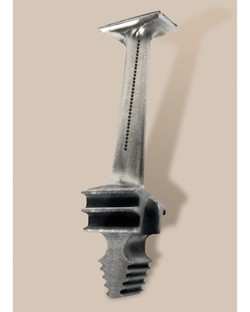
Dallas Airmotive's TomCat process, specifically developed for Spey and Tay engines, can save operators up to 35 percent on their turbine section overhauls. TomCat can safely extend the service life of High Pressure Stage 1 (HP1) turbine blades for an additional 4,000 hours or 10 years, whichever comes first, to minimize the need for blade replacement.

"Material replacement is a dominant cost factor in operating Speys and Tays," said Dallas Airmotive President and CEO Jim Donlan. "The TomCat process we developed can potentially save operators hundreds of thousands of dollars in blade replacements over the life of the engine."

To date, Dallas Airmotive has successfully applied their TomCat inspection on more than 800 Spey and Tay corporate and regional airline powerplants. TomCat employs non-destructive radiographic inspection (X-Ray Tomography) to examine and measure the leading edge wall thickness of each HP1 turbine blade. Before the TomCat process begins, the HP1 blades are stripped of aluminized coating, cleaned, inspected with fluorescent penetrant, and the leading edge dressing is completed. Then Tomography is used to inspect the turbine blades by rotating them in a fan beam of radiation. This provides the desired cross-section views to determine turbine blade wall thickness. This process accurately determines the remaining service life based on each blade's actual physical condition rather than the number of cycles. Dallas Airmotive imprints serial numbers on every TomCat blade, and X-Rays of the blades are kept on file to verify their condition.

In evaluating the HP1 blades, Dallas Airmotive uses its extensive Spey and Tay historical data and its Rolls-Royce service experience with Spey and Tay major maintenance events.

FMI: www.dallasairmotive.com, www.bba-aviation.com

Advertisement

More News

ANN FAQ: Contributing To Aero-TV

How To Get A Story On Aero-TV News/Feature Programming How do I submit a story idea or lead to Aero-TV? If you would like to submit a story idea or lead, please contact Jim Campbel>[...]

Aero-News: Quote of the Day (12.10.25)

“As the excitement builds for the world of flight returning to Oshkosh in 2026, we wanted to ensure that advance tickets are available for those who enjoy giving AirVenture t>[...]

ANN's Daily Aero-Term (12.10.25): North Atlantic High Level Airspace (NAT HLA)

North Atlantic High Level Airspace (NAT HLA) That volume of airspace (as defined in ICAO Document 7030) between FL 285 and FL 420 within the Oceanic Control Areas of Bodo Oceanic, >[...]

Airborne 12.08.25: Samaritan’s Purse Hijack, FAA Med Relief, China Rocket Fail

Also: Cosmonaut Kicked Out, Airbus Scales Back, AF Silver Star, Russian A-60 Clobbered A Samaritan’s Purse humanitarian flight was hijacked on Tuesday, December 2, while atte>[...]

Airborne-Flight Training 12.04.25: Ldg Fee Danger, Av Mental Health, PC-7 MKX

Also: IAE Acquires Diamond Trainers, Army Drones, FedEx Pilots Warning, DA62 MPP To Dresden Tech Uni The danger to the flight training industry and our future pilots is clear. Dona>[...]

blog comments powered by Disqus



Advertisement

Advertisement

Podcasts

Advertisement

© 2007 - 2025 Web Development & Design by Pauli Systems, LC

