
FAA Issues SAIB For Century Flight System HSI | Aero-News Network
Aero-News Network
RSS icon RSS feed
podcast icon MP3 podcast
Subscribe Aero-News e-mail Newsletter Subscribe

Airborne Unlimited -- Most Recent Daily Episodes

Episode Date

Airborne-Monday

Airborne-Tuesday

Airborne-Wednesday Airborne-Thursday

Airborne-Friday

Airborne On YouTube

Airborne-Unlimited-11.24.25

AirborneNextGen-
11.18.25

Airborne-Unlimited-11.19.25

Airborne-AffordableFlyers-11.20.25

AirborneUnlimited-11.21.25

LIVE MOSAIC Town Hall (Archived): www.airborne-live.net

Thu, Mar 29, 2018

FAA Issues SAIB For Century Flight System HSI

Follows Special Airworthiness Bulletin Published By Australian Civil Aviation Authorities

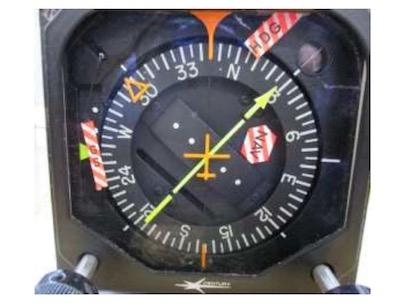
The Australian Government’s Civil Aviation Safety Authority (CASA) issued Airworthiness Bulletin (AWB) 31-009 Issue 1, dated March 28, 2017. This airworthiness bulletin informs owners and operators that drive belts fitted to HSI model number NSD360 are prematurely failing in service.

Now the FAA is recommending that  owners and operators of Century Flight Systems Inc. HSI model number NSD360 report any drive belt malfunctions, failures, or any other service difficulties to the FAA.

According to CASA, The criticality of these belts failing in service is considered major if the instrument is the primary source of directional information. Failure of this instrument is considered hazardous if there is an undetected accuracy error of more 10°.

CASA has received reports from various approved maintenance organisations that drive belts fitted to HSI model NSD360 are failing prematurely in service. The drive belt drives the compass card on the HSI through 360° of rotation in conjunction with the drive gear motor assembly.

The gyro drive belt is connected to the gyro assembly via a toothed gear that is mounted on top of the gyro capsule/casing.

The belt is then tensioned around the motor assembly gear and tensioned to medium tension with the belt tensioner bearing and bracket. The belt is held under tension at all times both in operation and in static/standby mode. Without correct function of the belt, the transfer of information from the drive motor and gyro assembly to the compass rose (front display) is compromised.

Failure of the timing belt can result in:

  • Stripped teeth
  • Fraying on edges
  • Broken reinforcing strings
  • Broken belt

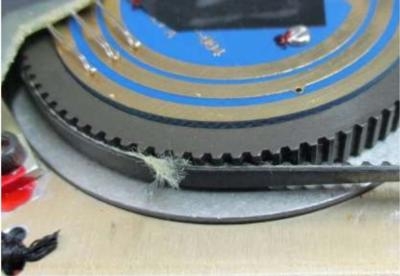
The belt is comprised of a number of load carrying tensile cords. The construction of the belt has changed. When the belts fray, the cords can get caught around the brush assembly P/N 81B340 - which is mounted on top of the gyro can - or other critical parts within the HSI. In some instances, the individual cords can snap and become wrapped around other critical components, or the belts can stretch or break completely causing loss of indicated direction.

(Images from CASA report)

FMI: www.casa.gov.au/file/181111/download?token=aohXuWIB

Advertisement

More News

Classic Aero-TV: Extra; the Airplane, the Man, and His Grand DeLand Plan

From 2023 (YouTube Edition): Germany’s Best by Way of Florida Established in 1980 by German aerobatic pilot Walter Extra as a means by which to design and develop his own air>[...]

ANN FAQ: Follow Us On Instagram!

Get The Latest in Aviation News NOW on Instagram Are you on Instagram yet? It's been around for a few years, quietly picking up traction mostly thanks to everybody's new obsession >[...]

Aero-News: Quote of the Day (11.27.25)

“Achieving PMA for the S-1200 Series magnetos is another step in expanding our commitment to providing the aviation community with the most trusted and durable ‘firewal>[...]

ANN's Daily Aero-Term (11.27.25): Ultralight Vehicle

Ultralight Vehicle A single-occupant aeronautical vehicle operated for sport or recreational purposes which does not require FAA registration, an airworthiness certificate, or pilo>[...]

ANN's Daily Aero-Linx (11.27.25)

Aero Linx: The de Havilland Moth Club Ltd The de Havilland Moth Club evolved from a belief that an association of owners and operators of Moth aeroplanes should be formed to create>[...]

blog comments powered by Disqus



Advertisement

Advertisement

Podcasts

Advertisement

© 2007 - 2025 Web Development & Design by Pauli Systems, LC

