
Alaska ANG Finishes Training On New Hoist System | Aero-News Network
Aero-News Network
RSS icon RSS feed
podcast icon MP3 podcast
Subscribe Aero-News e-mail Newsletter Subscribe

Airborne Unlimited -- Most Recent Daily Episodes

Episode Date

Airborne-Monday

Airborne-Tuesday

Airborne-Wednesday Airborne-Thursday

Airborne-Friday

Airborne On YouTube

Airborne-Unlimited-12.08.25

AirborneNextGen-
12.09.25

Airborne-Unlimited-12.10.25

Airborne-AffordableFlyers-12.11.25

AirborneUnlimited-12.12.25

AFE 2025 LIVE MOSAIC Town Hall (Archived): www.airborne-live.net

Tue, May 13, 2025

Alaska ANG Finishes Training On New Hoist System

Unit Set To Deploy Vita Rescue System

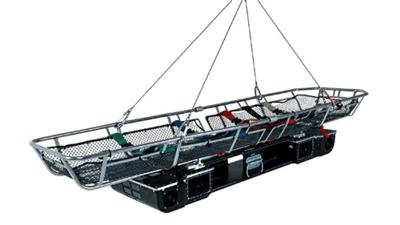
Vita Inclinata, provider of intelligent lift technology for aerospace and construction, announced the Alaska Air National Guard’s 210th Rescue Squadron completed certification training on its Vita Rescue System (VRS) and is fully mission-capable to deploy the hoist system in live rescue missions.

The 210th’s achievement comes shortly after the VRS completed airworthiness qualification by the U.S. Army and Air Force operational testing. The system was first deployed in the field by the military by the South Carolina Helicopter Aquatic Rescue Team.

The Alaska rescue squad becomes the latest unit trained and authorized to utilize the VRS in real-world operations and represents a significant step forward in the DoD’s efforts to modernize medevac capabilities.

Derek Sikora, Chief Technology Officer of Vita Inclinata said, “Today’s battlefield, and rescue field, demands more than traditional rope and litter missions. It demands precision, adaptability, and bold innovation. The VRS’s real-time stabilization capabilities represent a critical leap in mission safety and control. The Alaska Air Guard is leading the next era of hoist rescue.”

Known for its execution of high-stakes rescues in some of the most extreme terrain and conditions, the 210th conducted three days of intensive training on the VRS at Joint Base Elmendorf-Richardson near Anchorage.

In addition to normal training, the unit also learned procedures under simulated system failures and confirmed the aircrew’s ability to perform hoist operations under conditions of partial system degradation. This can be an essential element when conducting actual rescues in remote and challenging high-risk situations.

The operational testing confirmed the VRS’s ability to effectively stabilize litters in rotor wash and high-wind conditions that are a well-known and common challenges for conventional tag-line-based methods.

FMI:  www.vitaaerospace.com/

Advertisement

More News

ANN FAQ: Contributing To Aero-TV

How To Get A Story On Aero-TV News/Feature Programming How do I submit a story idea or lead to Aero-TV? If you would like to submit a story idea or lead, please contact Jim Campbel>[...]

Aero-News: Quote of the Day (12.10.25)

“As the excitement builds for the world of flight returning to Oshkosh in 2026, we wanted to ensure that advance tickets are available for those who enjoy giving AirVenture t>[...]

ANN's Daily Aero-Term (12.10.25): North Atlantic High Level Airspace (NAT HLA)

North Atlantic High Level Airspace (NAT HLA) That volume of airspace (as defined in ICAO Document 7030) between FL 285 and FL 420 within the Oceanic Control Areas of Bodo Oceanic, >[...]

Airborne 12.08.25: Samaritan’s Purse Hijack, FAA Med Relief, China Rocket Fail

Also: Cosmonaut Kicked Out, Airbus Scales Back, AF Silver Star, Russian A-60 Clobbered A Samaritan’s Purse humanitarian flight was hijacked on Tuesday, December 2, while atte>[...]

Airborne-Flight Training 12.04.25: Ldg Fee Danger, Av Mental Health, PC-7 MKX

Also: IAE Acquires Diamond Trainers, Army Drones, FedEx Pilots Warning, DA62 MPP To Dresden Tech Uni The danger to the flight training industry and our future pilots is clear. Dona>[...]

blog comments powered by Disqus



Advertisement

Advertisement

Podcasts

Advertisement

© 2007 - 2025 Web Development & Design by Pauli Systems, LC

