Weather Was Deteriorating Through The Day, Pilot Continued VFR Operations Into IFR Conditions
The NTSB has released its probable cause report from an accident which occurred May 6, 2016 near Skagway, Alaska. The pilot of the helicopter was fatally injured in the accident.
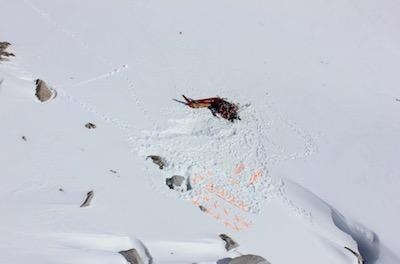
According to the report, the non-instrument-rated commercial pilot was making a visual flight rules internal-cargo company flight in the helicopter. He was returning to base in the helicopter after dropping off 1 employee and 12 dogs at a remote dog camp situated on a glacier surrounded by mountainous terrain. The pilot had previously completed 5 of the day's 7 planned roundtrip flights from the base to the dog camp. According to the dog camp manager, the weather was deteriorating with snow and wind increasing when the pilot departed on the accident flight. The dog camp manager's observations and radar data indicated that the pilot attempted to depart via the normal route to the south but turned around. He likely encountered low visibility conditions and then attempted several departures by routes to the north of the dog camp. About 8 minutes after departure, the helicopter impacted snow-covered mountainous terrain about 2 miles northeast of the dog camp.
Postaccident examination of the helicopter revealed no evidence of preimpact mechanical anomalies that would have precluded normal operation. Given the deteriorating weather conditions when the pilot departed, it is likely that the pilot continued visual flight into an area of instrument meteorological conditions, which resulted in the pilot experiencing a loss of visual reference and subsequent controlled flight into terrain.
During the impact sequence, the two cargo straps used to secure two wooden dog boxes to the rear cabin floor failed, and the dog boxes shifted forward, striking the back of the pilot's fiberglass seat. It could not be determined if the forward movement of the dog boxes during the accident sequence contributed to the injuries sustained by the pilot.
Immediately before departing from the dog camp on the accident flight, the pilot told the dog camp manager that, due to the degrading weather conditions, he would not be coming back for the last scheduled trip of the day, and the dog camp manager told the pilot that he agreed with him. However, the pilot then told the dog camp manager, "but don't give up on me yet," a statement consistent with self-induced pressure to complete the day's series of flights.
On one of the day's previous flights, the pilot reported to the base manager, who was exercising operational control at the time of the accident, that he had encountered icing conditions while in flight. The base manager told the pilot "to do what he thought was best." However, flight operations in icing conditions are prohibited by the helicopter's rotorcraft flight manual and the operator's operations manual, and the pilot's statement should have prompted the base manager to suspend the flights. If flight operations had been cancelled for the day when the pilot reported the icing conditions, the subsequent flights, including the accident flight, would not have occurred. The base manager's failure to appropriately exercise operational control and terminate the flights may have been due to the difference in experience between the base manager, who had been operating these flights for 8 years, and the pilot, who had been operating these flights for 25 years.
The NTSB determined the probable cause(s) of this accident to be the pilot's decision to continue visual flight into an area of instrument meteorological conditions, which resulted in the pilot experiencing a loss of visual reference and subsequent controlled flight into terrain. Contributing to the accident were the pilot's self-induced pressure to complete the flight and the operator's failure to maintain operational control over the flight.
(Source: NTSB. Image from NTSB docket)



 ANN's Daily Aero-Term (12.08.25): Decision Altitude (DA)


 See All