Pilot Was Conducting Phase 1 Testing Of His Airplane
A phase 1 testing flight for a Zenair 701 ended with a forced landing after the airplane developed problems during the flight. Neither person on board the airplane, one the airplane's sport-pilot owner and the other a pilot-rated passenger, was injured in the incident.
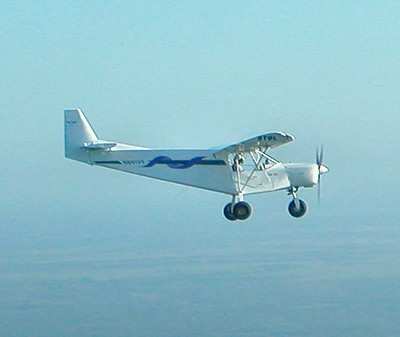
The airplane didn't fare so well. According to the NTSB's preliminary report, on October 19, 2013, about 1130 eastern daylight time, an experimental amateur built Zenair 701, N538HB, was substantially damaged during a forced landing, after a loss of engine power, in Zephyrhills, Florida. Visual meteorological conditions prevailed for the local personal flight conducted under the provisions of Title 14 Code of Federal Regulations Part 91, which departed from Zephyrhills Municipal Airport (ZPH), Zephyrhills, Florida.
According to the pilot, the purpose of the flight was to complete phase 1 testing to show that the experimental amateur built airplane was in compliance with Federal Aviation Administration requirements that required that it be capable of safe flight. After pulling the airplane out of the hangar he asked another pilot to fly with him and monitor the engine instruments and overall performance of the airplane. After a thorough preflight, he agreed to go with him. After taxiing to the runup area for runway 22, the pilot went through the pretakeoff procedure, and checked for other airplanes that may have been taking off or landing. He then radioed his intention to takeoff, and departed.
He climbed the airplane to 1,000 feet above mean sea level (msl) and departed the traffic pattern straight out on the runway heading. After a “few” turns, he established straight and level flight at a power setting of 75 percent of rated power, and then proceeded back to ZPH for some “touch and go” landings. After arriving at ZPH, He made a normal approach to runway 22 at 60 knots, and after touching down, applied full power, lifted off, and established a best rate of climb speed of 60 knots which resulted in a 400 feet per minute rate of climb. He then turned onto the crosswind leg of the traffic pattern, and when he reached 500 feet, announced his intention to do another “touch and go” landing over the radio.
A pilot of another airplane then transmitted that he was leaving the airport traffic pattern and asked whether the pilot had his airplane in sight. The pilot responded over the radio that he saw him and that he would extend the crosswind leg of the traffic pattern to make sure that they had “good spacing”. The pilot then turned onto the downwind leg of the traffic pattern, and the engine suddenly “overreved”. The pilot pulled back the throttle, and picked out an “emergency landing spot”. He tried adding power but, the “propeller” did not respond. He was now at 700 feet msl, and he did not have much time to make a decision about the spot he was going to land at. He then slowed the airplane to 55 knots as he approached a set of power transmission lines. As he came into close proximity with them, he slowed to 45 knots, passed under the lines, “stalled” the airplane, and then touched down hard substantially damaging the airplane.
(Image from file. Not accident airplane)



 Aero-News: Quote of the Day (12.07.25)


 See All