Wed, Jun 10, 2020
The Single-Pilot eSTOL Carries 500 Pounds of Cargo -- Off 300 Foot Runways
Airflow is developing their first electric Short Take-Off and Landing (eSTOL) aircraft designed for middle-mile logistics. Airflow’s aerial logistics network can move short-haul cargo quickly and cost-effectively over traffic by utilizing the unused airspace around cities.
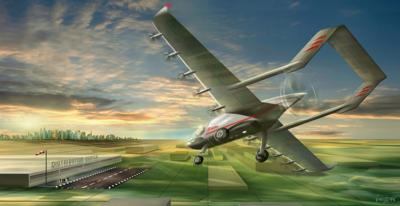
Five former Airbus Vahana team members, who have over 60 years of combined aerospace experience, started Airflow when they determined eSTOL aircraft could address the Urban Air Mobility (UAM) market for one-third the operating cost of electric Vertical Take-Off and Landing (eVTOL) aircraft. UAM is a transportation system using next-generation aircraft to move cargo and people in and out of urban areas by air.
The need for rapid middle-mile logistics capabilities (between 50 - 200 miles) is growing significantly due to e-commerce growth. To address that need, Airflow’s aerial logistics service can move cargo and time-sensitive medical supplies directly between warehouses without using traditional airports. Airflow’s eSTOL aircraft requires less than 150 feet to take off and land using a 300-foot runway, about the length of three helipads next to each other.
Airflow’s first eSTOL aircraft includes an electric propulsion system, single-pilot operations, and the ability to carry 500 lbs of cargo. This aircraft is a relatively simple fixed-wing aircraft, which dramatically reduces development and certification risk when compared with more complex aircraft. From a certification standpoint, eSTOL aircraft are conventional aircraft with new technology that is focused on enabling short-field capabilities. eSTOL aircraft can be certified under standard Part 23 regulations, whereas eVTOL aircraft must be certified using a more complicated and expensive process due to their more complex systems and potential failure modes.
“The demand for same-day e-commerce continues to rise, and we’re building a new low-cost aerial capability to enable that growth,” stated Marc Ausman, co-founder & CEO, “Our approach from the beginning is to focus on a simple aircraft design with well-defined new technology. In doing so, the team believes development and certification costs will be approximately $200MM versus more than $700MM for an eVTOL aircraft, making for more efficient use of capital.”
More News
Decision Altitude (DA) A specified altitude (mean sea level (MSL)) on an instrument approach procedure (ILS, GLS, vertically guided RNAV) at which the pilot must decide whether to >[...]
Aero Linx: T-34 Association, Inc. The T-34 Association was formed in July 1975 so that individuals purchasing then military surplus T-34As had an organization which would provide s>[...]
As He Released The Brakes To Begin Taxiing, The Brake Pedals Went To The Floor With No Braking Action Analysis: The pilot reported that during engine start up, he applied the brake>[...]
“Legislation like the Mental Health in Aviation Act is still imperative to hold the FAA accountable for the changes they clearly acknowledge need to be made... We cannot wait>[...]
Also: IAE Acquires Diamond Trainers, Army Drones, FedEx Pilots Warning, DA62 MPP To Dresden Tech Uni The danger to the flight training industry and our future pilots is clear. Dona>[...]



 ANN's Daily Aero-Term (12.08.25): Decision Altitude (DA)


 See All