Tue, Dec 02, 2025
Aerospace Giant Continues Sprint Towards Starship V3’s Next Test Flight
SpaceX is quickly moving on from the Booster 18 mishap, insisting it can still meet an already ambitious target for Starship V3. The ship’s twelfth flight remains scheduled for early 2026 despite its Super Heavy booster coming out of its first day of testing looking a little like a crushed soda can before the sun even rose.
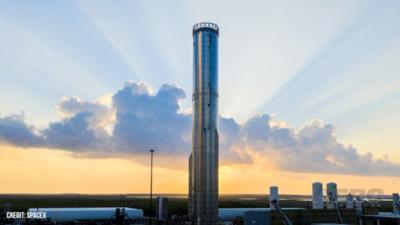
The booster test campaign began with gas-system pressure testing on November 21 at SpaceX's Massey facility in Starbase, Texas. Within hours, Booster 18 was significantly damaged. No propellant, no engines, and no injuries were involved…just one very wrinkled Super Heavy stage. But rather than triggering a multi-month grounding and redesign process, SpaceX has opted to resume business as usual.
“The Starbase team plans to have the next Super Heavy booster stacked in December, which puts it on pace with the test schedule planned for the first Starship V3 vehicle and associated ground systems,” the company wrote in a November 22 social media post. “Starship’s twelfth flight test remains targeted for the first quarter of 2026.”
Elon Musk has been pushing this timeline all year. He has repeatedly described V3 as a major leap over the current V2 design, claiming it should complete production and testing by year-end and support heavy flight activity next year. The billionaire even suggested V3 may be capable of early Mars work, and though NASA is not taking reservations just yet, SpaceX is surely a frontrunner due to their lengthy history in the Commercial Crew Program.
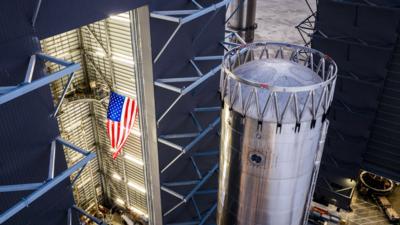
If anything, Starbase looked busier than usual in the days following the incident as teams rapidly began piecing together Booster 19. Starship stalkers reported that its fourth aft section rolled into the MegaBay over the holiday weekend, bringing the vehicle to 15 rings tall. With four sections stacked in five days, Booster 19 is on track to be the fastest-built Super Heavy yet.
As of now, only a few aft segments remain before the booster reaches full height. The accelerated work supports the company’s push toward V3 test readiness and the broader shift from the now-retired V2 program, whose flight campaign luckily ended on a high note earlier this year.
More News
Convective SIGMET A weather advisory concerning convective weather significant to the safety of all aircraft. Convective SIGMETs are issued for tornadoes, lines of thunderstorms, e>[...]
Aero Linx: United Flying Octogenarians WELCOME to a most extraordinary group of aviators, the United Flying Octogenarians (UFO). Founded in 1982 with just a handful of pilots, we h>[...]
Pilot’s Decision To Attempt Takeoff With Frost Covering The Airplane’s Wings Analysis: The pilot of the light sport airplane was preparing to depart for a cross-country>[...]
“We’ve paid for the cable line’s repair for the customer and have apologized for the inconvenience this caused them...” Source: Some followup info from an A>[...]
Coupled Approach An instrument approach performed by the aircraft autopilot, and/or visually depicted on the flight director, which is receiving position information and/or steerin>[...]



 ANN's Daily Aero-Term (12.01.25): Convective SIGMET


 See All