
OSHA Focuses Inspection Program On Safety For ATC Personnel | Aero-News Network
Aero-News Network
RSS icon RSS feed
podcast icon MP3 podcast
Subscribe Aero-News e-mail Newsletter Subscribe

Airborne Unlimited -- Most Recent Daily Episodes

Episode Date

Airborne-Monday

Airborne-Tuesday

Airborne-Wednesday Airborne-Thursday

Airborne-Friday

Airborne On YouTube

Airborne-Unlimited-12.01.25

AirborneNextGen-
12.02.25

Airborne-Unlimited-12.03.25

Airborne-AffordableFlyers-11.20.25

AirborneUnlimited-11.21.25

LIVE MOSAIC Town Hall (Archived): www.airborne-live.net

Tue, Aug 04, 2009

OSHA Focuses Inspection Program On Safety For ATC Personnel

Monitors Emergency Procedures For Control Tower Workers

The safety of airport traffic control tower personnel is the focus of an inspection targeting program titled "Federal Aviation Administration's Airport Traffic Control Tower Monitoring Program," which monitors how workers clear a control tower in case of fire and other emergencies. The inspection targeting program, conducted by the U.S. Department of Labor's Occupational Safety and Health Administration (OSHA), examines the FAA's air traffic control towers' provision of safe means of egress for workers at FAA-owned and operated towers.

The program requires the FAA to bring towers into compliance with the alternate standard for egress and fire safety. OSHA inspectors will inspect randomly selected towers to determine if the FAA is meeting this requirement. A description of OSHA's alternate standard is available online.

Current guidance based on the FAA's alternate standard allows for a single exit route where the building size, occupancy level, type of construction and workplace arrangement is such that all workers would be able to evacuate safely during an emergency.

"This agency's fundamental responsibility is to protect workers from unsafe workplaces," said acting Assistant Secretary of Labor for OSHA Jordan Barab. "Those who work in airport traffic control towers risk their safety if exit routes are not in place in the event of a fire. OSHA recognizes the importance of this inspection program and is confident that monitoring compliance with this standard will result in fewer worker injuries and deaths."

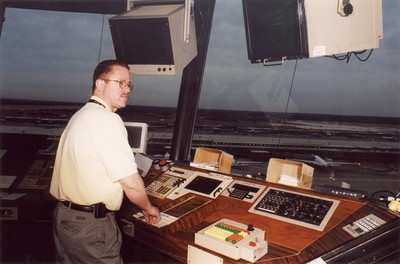
Control Tower File Photo

The standard also includes requirements such as incorporating fire detection and alarm systems, fire suppression equipment and emergency action plans. The standard currently covers 386 towers, of which 190 have been certified by the FAA as being in compliance.


FMI: www.osha.gov

Advertisement

More News

ANN's Daily Aero-Term (12.01.25): Convective SIGMET

Convective SIGMET A weather advisory concerning convective weather significant to the safety of all aircraft. Convective SIGMETs are issued for tornadoes, lines of thunderstorms, e>[...]

ANN's Daily Aero-Linx (12.01.25)

Aero Linx: United Flying Octogenarians WELCOME to a most extraordinary group of aviators, the United Flying Octogenarians (UFO). Founded in 1982 with just a handful of pilots, we h>[...]

NTSB Final Report: Remos Aircraft GmbH Remos GX

Pilot’s Decision To Attempt Takeoff With Frost Covering The Airplane’s Wings Analysis: The pilot of the light sport airplane was preparing to depart for a cross-country>[...]

Aero-News: Quote of the Day (12.02.25)

“We’ve paid for the cable line’s repair for the customer and have apologized for the inconvenience this caused them...” Source: Some followup info from an A>[...]

ANN's Daily Aero-Term (12.02.25): Coupled Approach

Coupled Approach An instrument approach performed by the aircraft autopilot, and/or visually depicted on the flight director, which is receiving position information and/or steerin>[...]

blog comments powered by Disqus



Advertisement

Advertisement

Podcasts

Advertisement

© 2007 - 2025 Web Development & Design by Pauli Systems, LC

