Best Practices Put In Place Gate-To-Gate For Honolulu-Brisbane, Australia Flights
Hawaiian Airlines this week became the first carrier to fly between Honolulu and Brisbane, Australia using a series of gate-to-gate environmental best practices to reduce fuel burn and carbon emissions.

Hawaiian Airlines Flight 443 arrived at Brisbane Airport at 7:11 p.m. local time yesterday after a 9-hour, 28-minute flight that implemented seven environmental markers outlined by the Asia and Pacific Initiative to Reduce Emissions (ASPIRE), a group of worldwide aviation leaders dedicated to advancing environmental stewardship in the industry.
Beginning with Hawaiian’s A330 aircraft departure from Honolulu International Airport, Captain Brian Beres, First Officer Jason Akina and International Relief Officer David Kahoaka used numerous taxiing, in-flight and landing procedures projected to save 1,500 pounds of fuel. Based on Hawaiian’s three weekly flights, the potential annual savings equate to removing 142 cars off the road, or 670 metric tons of CO2, according to EPA calculations.
“As a Hawai‘i-based airline in the center of the Pacific Ocean, we are particularly mindful of the importance of minimizing our impact on the environment and island home,” said Captain Ken Rewick, Hawaiian’s vice president of flight operations. “It was an honor for our employees in Honolulu and Brisbane to collaborate with our Australian partners and the Federal Aviation Administration to achieve remarkable operational efficiencies.”
Stephen Angus, executive general manager of Air Navigation Services for Airservices Australia, said each agency has a unique role to play during an ASPIRE flight.
“Our role at Airservices is to use efficient air traffic management practices to ensure the success of the ASPIRE flight,” he said. “This new route is another example of airlines, airports and air navigation agencies working together to reduce aviation emissions globally.”
“Brisbane Airport Corporation is proud to support Hawaiian Airlines in showcasing environmental strategies that reduce fuel burn and carbon emissions in aviation operations,” said Stephen Goodwin, Brisbane Airport Corporation’s general manager of operations. “As such, Brisbane Airport, in conjunction with the ground handler, will assist to ensure ground power units and pre-conditioned air is made available for these flights.”
Hawaiian will complete its roundtrip ASPIRE flight on Sept. 22 when HA Flight 444 departs Brisbane at 9:45 p.m. (Australian Eastern Standard Time) with a scheduled 11:20 a.m. (Hawaii Standard Time) arrival in Honolulu.
During both flights, Hawaiian is using gate-to-gate advanced air traffic management procedures and collaborating with air navigation providers, including Airservices Australia and the Federal Aviation Administration (FAA), to demonstrate all seven of ASPIRE’s best practices. Among them are User Preferred Routes, which allow airlines to customize a more efficient flight path based on factors such as fuel optimization and forecasted winds; Dynamic Airborne Reroute Procedures, or the ability to conduct multiple in-flight route adjustments in response to updated atmospheric conditions; and Optimized Descent Profile, which permits an aircraft to approach an airport and land with minimal changes in engine thrust.
The other ASPIRE strategies include 30/30 Reduced Oceanic Separation; Time-based Arrivals Management; Arrivals Optimization; Departures Optimization; and Surface Movement Optimization.
In 2008, Airservices Australia, Airways New Zealand and the FAA joined forces to create ASPIRE. The joint venture is designed to lessen the environmental impact of aviation across Asia and the South Pacific. To qualify as an ASPIRE Daily City Pair route, aircraft must be equipped with advanced avionics, including satellite-based Required Navigation Performance avionics and the Future Air Navigation System.
Honolulu-Brisbane becomes Hawaiian’s second city pair, following the carrier’s successful inaugural ASPIRE flight from Auckland to Honolulu on April 22.
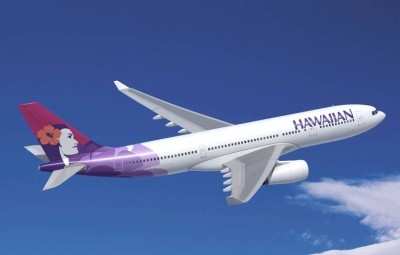
(Top image provided with Hawaiian Airlines news release. From left: Captain Brian Beres, Hawaiian Airlines operations chief pilot, and First Officer Jason Akina conduct pre-flight checks prior to the carrier's ASPIRE flight between Honolulu and Brisbane. Lower image from file)



 Classic Aero-TV: In Praise of Alabamas Patriot Aircraft USA


 See All