

Lockheed May Dump Embraer As Spy Plane Partner | Aero-News Network
Aero-News Network
RSS icon RSS feed
podcast icon MP3 podcast
Subscribe Aero-News e-mail Newsletter Subscribe

Airborne Unlimited -- Most Recent Daily Episodes

Episode Date

Airborne-Monday

Airborne-Tuesday

Airborne-Wednesday Airborne-Thursday

Airborne-Friday

Airborne On YouTube

Airborne-Unlimited-12.08.25

AirborneNextGen-
12.09.25

Airborne-Unlimited-12.10.25

Airborne-AffordableFlyers-12.11.25

AirborneUnlimited-12.05.25

AFE 2025 LIVE MOSAIC Town Hall (Archived): www.airborne-live.net

Mon, Sep 12, 2005

Lockheed May Dump Embraer As Spy Plane Partner

Army Still Skeptical Of Brazilian Manufacturer

It looks for all the world like Lockheed-Martin may reluctantly bounce Brazilian plane-maker Embraer from its list of partners on the Army's Aerial Common Sensor program. The reason: The US Army says the ERJ-145 is just too small and the Army is reluctant to go with a bigger Embraer aircraft without rebidding the project.

Lockheed and Embraer had suggested using the much larger Embraer 190 as a platform for the electronics-packed sensor package. But even that model may not have the lifting power to handle the projected weight -- which is now approximately 40-percent more than what Lockheed figured when the contract was awarded 13 months ago.

It would be a huge blow to Embraer. The initial development contract is worth $879 million. If the Lockheed platform were to go into full production, the contract could be worth well over $7 billion. Even worse for the Brazilian plane-maker, the Navy, which is taking a wait-and-see attitude toward development of the ACS, is expected to eventually add billions of dollars more to the order.

The Wall Street Journal reported Monday the 190 "continues as one of the alternatives being considered," according to a Lockheed spokeswoman. But because the 190 is untested for military applications, Lockheed is moving quickly to distance itself from Embraer and pick another airframe provider in hopes of saving the contract altogether.

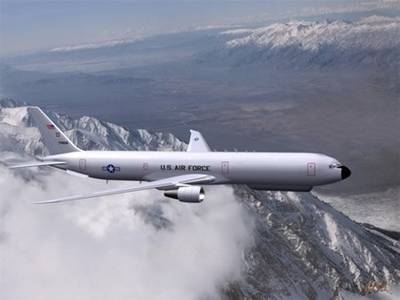
That may prove difficult. The Army, like the Navy, may be ready to step away from the project and wait for the Air Force to develop its own sensor platform, the E-10A (above) Multisensor Command and Control aircraft. That plane is now being developed by a team that includes Boeing, Raytheon and Northrop Grumman.

A final decision from the Army could come as early as this week.

FMI: www.army.mil, www.lcmo.com

Advertisement

More News

ANN's Daily Aero-Term (12.08.25): Decision Altitude (DA)

Decision Altitude (DA) A specified altitude (mean sea level (MSL)) on an instrument approach procedure (ILS, GLS, vertically guided RNAV) at which the pilot must decide whether to >[...]

ANN's Daily Aero-Linx (12.08.25)

Aero Linx: T-34 Association, Inc. The T-34 Association was formed in July 1975 so that individuals purchasing then military surplus T-34As had an organization which would provide s>[...]

NTSB Final Report: Piper PA-31T3

As He Released The Brakes To Begin Taxiing, The Brake Pedals Went To The Floor With No Braking Action Analysis: The pilot reported that during engine start up, he applied the brake>[...]

Aero-News: Quote of the Day (12.08.25)

“Legislation like the Mental Health in Aviation Act is still imperative to hold the FAA accountable for the changes they clearly acknowledge need to be made... We cannot wait>[...]

Airborne-Flight Training 12.04.25: Ldg Fee Danger, Av Mental Health, PC-7 MKX

Also: IAE Acquires Diamond Trainers, Army Drones, FedEx Pilots Warning, DA62 MPP To Dresden Tech Uni The danger to the flight training industry and our future pilots is clear. Dona>[...]

blog comments powered by Disqus



Advertisement

Advertisement

Podcasts

Advertisement

© 2007 - 2025 Web Development & Design by Pauli Systems, LC

