

Neptune Converts Airbus A319 for Aerial Firefighting | Aero-News Network
Aero-News Network
RSS icon RSS feed
podcast icon MP3 podcast
Subscribe Aero-News e-mail Newsletter Subscribe

Airborne Unlimited -- Most Recent Daily Episodes

Episode Date

Airborne-Monday

Airborne-Tuesday

Airborne-Wednesday Airborne-Thursday

Airborne-Friday

Airborne On YouTube

Airborne-Unlimited-12.08.25

AirborneNextGen-
12.02.25

Airborne-Unlimited-12.03.25

Airborne-FltTraining-12.04.25

AirborneUnlimited-12.05.25

AFE 2025 LIVE MOSAIC Town Hall (Archived): www.airborne-live.net

Thu, Dec 05, 2024

Neptune Converts Airbus A319 for Aerial Firefighting

Transitioned Fleet Expected to Enter Service by 2027 Wildfire Season

On December 3, Neptune Aviation Services revealed that it has begun transitioning its aerial firefighting platform to the Airbus A319. The provider is working alongside Aerotec & Concept to convert the aircraft, slated for completion by 2027’s wildfire season.

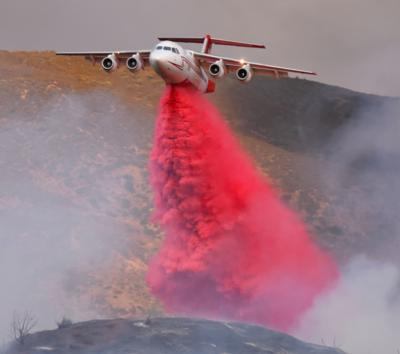
Neptune currently utilizes a fleet of BAe 146 tankers, capable of carrying 3,000 of fire retardant or water and being turned around in just 8 minutes. The company purchased its first BAe 146 in 2010 and now operates around nine. Though the aircraft is not the fastest or most efficient by modern standards, it has managed to get the job done during its 14 years of service.

“The BAe 146 is very maneuverable which makes it an excellent aircraft for operations over challenging terrain,” explained Ryan Baer, Neptune Aviation’s Chief Pilot. “It also has reliable slow speed characteristics with a speed brake that is deployable during a drop.”

Neptune began researching fleet upgrades in 2022. The choice was not taken lightly, as the team needed to carefully analyze airframes, simulate retardant drops, and find an engineering partner. Two years later, the company landed on the Airbus A319.

The A319 is, for the first time, being converted to meet wildlife firefighting needs under a partnership between Neptune and Aerotec & Concept. The pair expect to have the first aircraft ready-to-go for the 2027 wildfire season.

The aircraft will increase the retardant/water capacity by 1,500 gallons, providing a 4,500-gallon total capacity. The A319 also has larger fuel tanks, advanced avionics, and additional safety features, allowing Neptune to more effectively service remote fires.

“As the leader in aerial firefighting, we are always focused on continuous improvement,” stated Jennifer Draughon, President of Neptune Aviation. “The Airbus A319’s larger size and higher maximum takeoff weight allow for greater fire retardant capacity, improving operational efficiency, and enhancing the safety of our crews, firefighters on the ground, and the communities we protect.”

The transition from the BAe 146 to the A319 fleet will occur over several years. Neptune hopes to eventually operate 10-15 aircraft, a mix between both, in total.

FMI: www.neptuneaviation.com

Advertisement

More News

Aero-FAQ: Dave Juwel's Aviation Marketing Stories -- ITBOA BNITBOB

Dave Juwel's Aviation Marketing Stories ITBOA BNITBOB ... what does that mean? It's not gibberish, it's a lengthy acronym for "In The Business Of Aviation ... But Not In The Busine>[...]

NTSB Prelim: Rutan Long-EZ

The Pilot Attempted Several Times To Restart The Engine And Diverted To Long Beach Airport/Daughtery Field On October 20, 2025, about 1603 Pacific daylight time, an experimental am>[...]

ANN's Daily Aero-Term (12.05.25): Hazardous Weather Information

Hazardous Weather Information Summary of significant meteorological information (SIGMET/WS), convective significant meteorological information (convective SIGMET/WST), urgent pilot>[...]

Aero-News: Quote of the Day (12.05.25)

"The latest development underscores the government of Malaysia’s commitment in providing closure to the families affected by this tragedy..." Source: From statements made by >[...]

Airborne-Flight Training 12.04.25: Ldg Fee Danger, Av Mental Health, PC-7 MKX

Also: IAE Acquires Diamond Trainers, Army Drones, FedEx Pilots Warning, DA62 MPP To Dresden Tech Uni The danger to the flight training industry and our future pilots is clear. Dona>[...]

blog comments powered by Disqus



Advertisement

Advertisement

Podcasts

Advertisement

© 2007 - 2025 Web Development & Design by Pauli Systems, LC

