
FAA Updates DC-Area Unmanned Aircraft Procedures | Aero-News Network
Aero-News Network
RSS icon RSS feed
podcast icon MP3 podcast
Subscribe Aero-News e-mail Newsletter Subscribe

Airborne Unlimited -- Most Recent Daily Episodes

Episode Date

Airborne-Monday

Airborne-Tuesday

Airborne-Wednesday Airborne-Thursday

Airborne-Friday

Airborne On YouTube

Airborne-Unlimited-12.08.25

AirborneNextGen-
12.09.25

Airborne-Unlimited-12.10.25

Airborne-AffordableFlyers-12.11.25

AirborneUnlimited-12.05.25

AFE 2025 LIVE MOSAIC Town Hall (Archived): www.airborne-live.net

Wed, Feb 10, 2016

FAA Updates DC-Area Unmanned Aircraft Procedures

Allows Flight In The Outer Ring Of The SFRA ... Under Certain Conditions

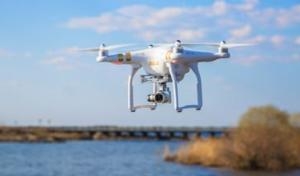
The FAA is updating its conditions for flying unmanned aircraft in the area between 15 and 30 miles from Washington, D.C. to clarify differences for various types of unmanned aircraft. As of 12:01 a.m. EST, Wednesday, February 10, the operating procedures will allow model aircraft, commercial and public users to operate in the outer ring of the Special Flight Rules Area (SFRA) under specific conditions.

The SFRA rule still prohibits unmanned aircraft operations within 15 miles of Washington, D.C. in the Flight Restricted Zone without specific FAA authorization.
 
Under the new procedures, hobbyists and recreational unmanned aircraft operators can fly aircraft that weigh less than 55 lbs. (including any attachments such as a camera) in the area between 15 and 30 miles of Washington, D.C. if the aircraft are registered and marked, and they follow specific operating conditions. The operating conditions require them to fly 400 feet or lower above the ground, stay in the operator's line of sight, only fly in clear conditions, and avoid other aircraft.
 
If hobbyists intend to operate within five miles of an airport or heliport, the new procedures also require them to notify the airport, heliport and air traffic control tower, if there is one, before operating.
 
Commercial and other non-model aircraft operators must register and mark their unmanned aircraft, must have an exemption and comply with it, and must notify the FAA an hour before operating to provide specific flight information.
 
Public operators, such as federal, state or local governments, must also register and mark their aircraft, must have the appropriate FAA authorization to operate, and must complete the same one-hour notification before operating.

(Source: FAA news release)

FMI: www.faa.gov

Advertisement

More News

Aero-News: Quote of the Day (12.09.25)

“We respectfully call on the City of Mesa to: 1. Withdraw the landing fee proposal immediately 2. Engage with the aviation community before making decisions that impact safet>[...]

ANN's Daily Aero-Term (12.09.25): High Speed Taxiway

High Speed Taxiway A long radius taxiway designed and provided with lighting or marking to define the path of aircraft, traveling at high speed (up to 60 knots), from the runway ce>[...]

ANN's Daily Aero-Linx (12.09.25)

Aero Linx: International Federation of Airworthiness (IFA) IFA uniquely combines together all those with responsibility for policies, principles and practices concerned with the co>[...]

NTSB Final Report: Diamond Aircraft Ind Inc DA20C1 (A1); Robinson Helicopter R44

Controller’s Expectation That VW02 Would Have Departed Sooner Led To An Inadequate Scan And Loss Of Situational Awareness Analysis: A Robinson R-44 helicopter N744AF, VW02 (V>[...]

ANN FAQ: Q&A 101

A Few Questions AND Answers To Help You Get MORE Out of ANN! 1) I forgot my password. How do I find it? 1) Easy... click here and give us your e-mail address--we'll send it to you >[...]

blog comments powered by Disqus



Advertisement

Advertisement

Podcasts

Advertisement

© 2007 - 2025 Web Development & Design by Pauli Systems, LC

