

NASA’s OIG Report On Management Of Mobile Launcher 2 Project | Aero-News Network
Aero-News Network
RSS icon RSS feed
podcast icon MP3 podcast
Subscribe Aero-News e-mail Newsletter Subscribe

Airborne Unlimited -- Most Recent Daily Episodes

Episode Date

Airborne-Monday

Airborne-Tuesday

Airborne-Wednesday Airborne-Thursday

Airborne-Friday

Airborne On YouTube

Airborne-Unlimited-12.01.25

AirborneNextGen-
11.18.25

Airborne-Unlimited-11.19.25

Airborne-AffordableFlyers-11.20.25

AirborneUnlimited-11.21.25

LIVE MOSAIC Town Hall (Archived): www.airborne-live.net

Tue, Sep 03, 2024

NASA’s OIG Report On Management Of Mobile Launcher 2 Project

Second Launcher Needed For Larger Variants Of Space Launch System

The NASA Office of Inspector General (OIG) conducted an audit to determine how the agency was meeting its cost, schedule, and performance goals, and the actions the agency has taken to control future cost increases and schedule delays.

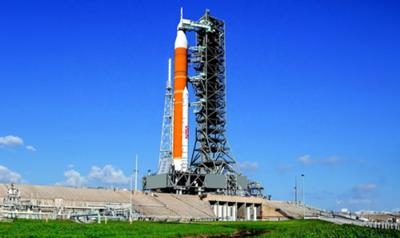
NASA’s Artemis series of space missions will use the Space Launch System (SLS) super heavy lift vehicle to launch the Orion Crew module into space. The SLS booster rockets and Orion are vertically assembled into a single spacecraft on top of the mobile launch platform inside the Vehicle Assembly Building. When complete, the mobile launcher with the spacecraft on top is moved to the launch pad. NASA has one mobile launcher, ML-1, for initial Artemis launches. A second, larger one, ML-2, is needed to handle larger SLS variants starting with the Artemis IV launch in 2028.

The prime contractor on the ML-2 is Bechtel National, Inc., of Reston, Virginia. They are responsible for design, engineering, fabrication, testing, and quality control. The initial contract in June 2019 was for $383 million with delivery to NASA slated for March 2023. However, by August 2022 the contract had increased to more than $1 billion and delivery was pushed back to May 2026. In June of this year, NASA set a commitment to Congress for a total cost of $1.8 billion but has struggled to incentivize improvement in contractor performance or to develop a reliable cost and schedule.

The OIG estimate that Bechtel’s costs will continue to rise and the ML-2 will not be delivered to NASA until spring 2029, well beyond the scheduled launch date of Artemis IV. NASA disagrees with this analysis; however, the agency did not establish an Agency Baseline Commitment until June of this year and lacked a cost and schedule estimate before that. As a result, costs and schedule estimates have changed several times, making it difficult for NASA to identify its funding needs, to measure project and contractor performance, or to be accountable to Congress.

The OIG audit is an interesting read and is available at the link below.

FMI:  oig.nasa.gov/

Advertisement

More News

ANN's Daily Aero-Term (11.29.25): Waypoint

Waypoint A predetermined geographical position used for route/instrument approach definition, progress reports, published VFR routes, visual reporting points or points for transiti>[...]

ANN's Daily Aero-Linx (11.29.25)

Aero Linx: Sentimental Journey to Cub Haven Sentimental Journey Flyin began in 1986 with a group of dedicated volunteers working to provide a sentimental return to Lock Haven, the >[...]

NTSB Prelim: Jabiru USA Sport Aircraft LLC J230-SP

The Pilot Would Often Fly Over Their House At A Low Altitude And That Family Members Would Go Outside To Wave On November 14, 2025, at 1708 eastern standard time, a Jabiru USA Spor>[...]

Classic Aero-TV: Crafting The Future of eVTOL Infrastructure

From 2024 (YouTube Edition): Volatus Infrastructure Paves The Way The name “Volatus” seems to be everywhere these days, popping up in a series of partnerships and proje>[...]

Klyde Morris (11.28.25)

Fortnite Conquers All, Klyde FMI: www.klydemorris.com>[...]

blog comments powered by Disqus



Advertisement

Advertisement

Podcasts

Advertisement

© 2007 - 2025 Web Development & Design by Pauli Systems, LC

