Fri, Jun 21, 2013
Prioritizes Support For Long-Term 'Core' Exploration Goals
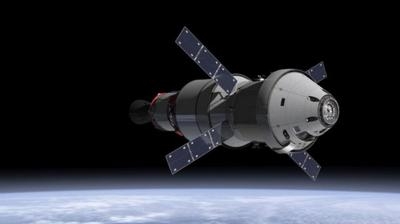
The Space Subcommittee of the U.S. House Science Committee held a hearing Wednesday to review draft legislation to reauthorize programs at NASA for two years, including a topline budget of over $16.8 billion dollars for the agency, which is consistent with the requirements of the Budget Control Act. The draft bill directs the administration to focus on core programs such as the Space Launch System (SLS) and Orion crew capsule, the International Space Station, the James Webb Space Telescope and the Commercial Crew Program.

The President’s fiscal year 2014 NASA budget proposal requests funding for an Asteroid Retrieval Mission. Members and witnesses at the hearing indicated that this proposal lacks details, justification and support from NASA’s advisory bodies. “Because the mission appears to be a costly and complex distraction, this bill prohibits NASA from doing any work on the project and we will work with appropriators to ensure the agency complies with this directive,” said Space Subcommittee Chairman Steven Palazzo (R-MS) (pictured).
The draft bill authorizes SLS at over $1.7 billion, $28 million above the Administration’s request, and the Orion crew capsule at $1.2 billion. The Commercial Crew program is authorized at $700 million, which includes several accountability measures and a non-negotiable flight readiness deadline of December 31, 2017. The International Space Station is authorized at over $2.9 billion, which includes a framework for NASA to determine the future life of the Station with a priority on microgravity research.
“In addition to authorizing funding and giving direction to the agency for critical missions, the Committee has included several measures to ensure good government practices and transparency within NASA. This authorization bill reflects a sincere effort to maximize return to the taxpayer while working to protect America’s role as the world leader in space exploration," Palazzo said. "We must ensure that every single dollar appropriated to NASA is spent effectively and efficiently. As mandatory spending continues to erode important discretionary investments like NASA, we are forced to make very difficult decisions. This is unfortunately the reality we must face until the federal government can get its finances in order. That is why this discussion draft complies with the law of the land – the Budget Control Act, which passed the Senate, the House and was signed by the President.”
The $4.62 billion authorized for NASA’s Science Mission Directorate is intended to ensure critical programs continue on schedule, including the James Webb Space Telescope and Planetary Science missions. Over the last five years the Earth Science program has grown by more than 40 percent. With 13 other agencies throughout the federal government spending $2.5 billion on climate-related research, the draft NASA reauthorization seeks a more balanced portfolio of science mission programs, while moderating recent increases to earth science.
In a letter of support submitted prior to Wednesday's hearing, The Planetary Society stated:
"The Planetary Society strongly supports the funding levels authorized for Planetary Science in the National Aeronautics and Space Administration Authorization Act of 2013 proposed in the United States House of Representatives. The House Science Committee, working within very stringent budgetary limitations, prioritized funding for the Planetary Science Division commensurate with its importance to NASA’s core mission of exploration."
(Orion crew module image provided by NASA.)
More News
Ultrahigh Frequency (UHF) The frequency band between 300 and 3,000 MHz. The bank of radio frequencies used for military air/ground voice communications. In some instances this may >[...]
During The 7 Second Descent, There Was Another TAWS Alert At Which Time The Engine Remained At Full Power On October 24, 2025 at 2115 mountain daylight time, a Cirrus SR22T, N740TS>[...]
From 2009 (YouTube Edition): Educational Organization Aims to Inspire by Sharing Tuskegee Story Founding leader Don Hinz summarized the Red Tail Project’s mission in simple, >[...]
“This feels like an important step since space travel for people with disabilities is still in its very early days... I’m so thankful and hope it inspires a change in m>[...]
Also: New Katanas, Kern County FD Training, IndiGo’s Botched Roster, MGen. Leavitt Named ERAU Dean The Australian Transportation Safety Bureau (ATSB) has wrapped up its inves>[...]



 ANN's Daily Aero-Term (12.19.25): Ultrahigh Frequency (UHF)


 See All