Thu, Feb 09, 2012
NTSB Determines Pilot Error Caused The 2010 Accident
It's a story that's unfortunately far too common. A pilot makes
a flight for which he or she is not qualified, and the result is
predictable, and tragic. In this case, a helicopter pilot continued
into IFR conditions in unfamiliar surroundings. Both he and his
passenger were fatally injured.
NTSB Identification: ERA10FA403
14 CFR Part 91: General Aviation
Accident occurred Monday, August 02, 2010 in Blairsville, GA
Probable Cause Approval Date: 02/06/2012
Aircraft: ROBINSON HELICOPTER COMPANY R44 II, registration:
N34JS
Injuries: 2 Fatal.
The non-instrument-rated private pilot departed on a multi-leg
cross-country trip without obtaining a weather briefing or filing a
flight plan. Prior to the flight, the pilot asked a friend, a
commercial helicopter operator, to accompany him on the trip, as
the pilot had never flown over mountainous terrain. The friend
could not accompany him due to a prior commitment and tried to
dissuade the pilot from going because he thought the pilot needed
mountain flying experience, but the pilot insisted on making the
flight. When the helicopter failed to arrive at its destination, an
alert notice was issued. The helicopter was located by aerial
search in mountainous terrain 4 days after the accident.
Examination of satellite images revealed that the wreckage was
located in a box canyon and that the wreckage path was oriented
opposite the intended route of flight. An AIRMET advisory for
instrument meteorological conditions and mountain obscuration were
current for the route of flight and the crash site. Satellite
images from over the accident site around the time of the accident
depicted an area of low stratiform clouds that extended over the
area. Examination of the wreckage revealed no evidence of
pre-impact mechanical malfunction, and the damage was consistent
with controlled flight into terrain.
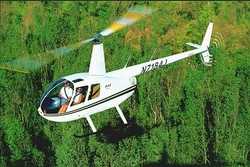
File Photo
Post mortem examinations and testing revealed heart disease and
the use of amphetamine and anti-depressant medications. At least
two of the medications that the pilot was taking are not permitted
by the Federal Aviation Administration for use while flying, but he
did not report them. However, it could not be determined whether
the pilot's heart disease or his use of unapproved medications
posed a significant risk to flight safety.
The National Transportation Safety Board determines the probable
cause(s) of this accident to be the non-instrument-rated pilot's
continued visual flight into instrument meteorological conditions,
which resulted in controlled flight into terrain.
More News
“We respectfully call on the City of Mesa to: 1. Withdraw the landing fee proposal immediately 2. Engage with the aviation community before making decisions that impact safet>[...]
High Speed Taxiway A long radius taxiway designed and provided with lighting or marking to define the path of aircraft, traveling at high speed (up to 60 knots), from the runway ce>[...]
Aero Linx: International Federation of Airworthiness (IFA) IFA uniquely combines together all those with responsibility for policies, principles and practices concerned with the co>[...]
Controller’s Expectation That VW02 Would Have Departed Sooner Led To An Inadequate Scan And Loss Of Situational Awareness Analysis: A Robinson R-44 helicopter N744AF, VW02 (V>[...]
A Few Questions AND Answers To Help You Get MORE Out of ANN! 1) I forgot my password. How do I find it? 1) Easy... click here and give us your e-mail address--we'll send it to you >[...]



 Aero-News: Quote of the Day (12.09.25)


 See All