
Tecnam Evaluating ‘P JET’ Aircraft | Aero-News Network
Aero-News Network
RSS icon RSS feed
podcast icon MP3 podcast
Subscribe Aero-News e-mail Newsletter Subscribe

Airborne Unlimited -- Most Recent Daily Episodes

Episode Date

Airborne-Monday

Airborne-Tuesday

Airborne-Wednesday Airborne-Thursday

Airborne-Friday

Airborne On YouTube

Airborne-Unlimited-12.08.25

AirborneNextGen-
12.09.25

Airborne-Unlimited-12.10.25

Airborne-AffordableFlyers-12.11.25

AirborneUnlimited-12.12.25

AFE 2025 LIVE MOSAIC Town Hall (Archived): www.airborne-live.net

Thu, May 14, 2015

Tecnam Evaluating ‘P JET’ Aircraft

Would Be A Two-Place, Single Engine Jet Airplane Targeted To The Military

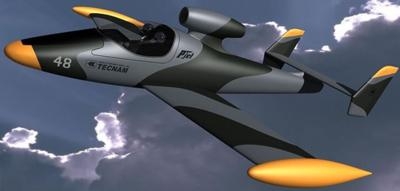
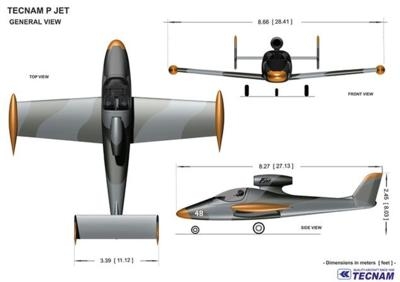
Tecnam is actively evaluating the potential of developing and producing a two-place, single turbofan engine powered aircraft, according to the company.

Tecnam said on its website that "innovative developments are driven by customer demand," and "extensive interest has been shown for the introduction of a two seat (side by side), turbofan engine powered aircraft, to be used by military Flight Training Organizations, but also to offer a significantly faster and more efficient aircraft for both the private and business aviation sectors."
 
The ‘P JET’ will undoubtedly be a game-changer not only in the world of General Aviation but also as a first level entry military training jet powered aircraft. Tecnam’s initial research suggests that manufacturing this visionary aircraft is both technically and economically achievable. The remarkable progress in the development and reliability of thermic and mechanical efficiency now available in high bypass, two-spool turbofan engines, along with major advances in materials ensures that production of the ‘P JET’ is a feasible proposition.

The anticipated ‘P JET’ aircraft configuration would see the engine ‘podded’ thus ensuring the maximum efficiency to achieve the full ram-air intake effect, as this would not interfere with the primary aircraft structure and would also enable easier access for maintenance inspections, complete engine disassembling and other servicing requirements as well as enhanced safety protection such as fire.
 
Other key design features will include a twin-tail vertical stabilizer: its shielding effect to the horizontal surface will increase (being equal the exposed surface) the control power and stability.

Tecnam anticipates that the ‘P JET’ cabin will be available both pressurized and non-pressurized, for use with an airframe integrated oxygen system.
 
Development will be based on achieving CS-23 and FAR 23 certification. 

(Images provided by Tecnam)

FMI: www.tecnam.com

Advertisement

More News

ANN's Daily Aero-Linx (12.12.25)

Aero Linx: Commercial Aviation Safety Team (CAST) Founded in 1997, the Commercial Aviation Safety Team (USCAST) has developed an integrated, data-driven strategy to reduce the comm>[...]

ANN's Daily Aero-Term (12.12.25): Land And Hold Short Operations

Land And Hold Short Operations Operations that include simultaneous takeoffs and landings and/or simultaneous landings when a landing aircraft is able and is instructed by the cont>[...]

ANN FAQ: How Do I Become A News Spy?

We're Everywhere... Thanks To You! Even with the vast resources and incredibly far-reaching scope of the Aero-News Network, every now and then a story that should be reported on sl>[...]

NTSB Final Report: Cirrus Design Corp SF50

Pilot’s Inadvertent Use Of The Landing Gear Control Handle Instead Of The Flaps Selector Switch During The Landing Rollout Analysis: The pilot reported that during the landin>[...]

Airborne 12.08.25: Samaritan’s Purse Hijack, FAA Med Relief, China Rocket Fail

Also: Cosmonaut Kicked Out, Airbus Scales Back, AF Silver Star, Russian A-60 Clobbered A Samaritan’s Purse humanitarian flight was hijacked on Tuesday, December 2, while atte>[...]

blog comments powered by Disqus



Advertisement

Advertisement

Podcasts

Advertisement

© 2007 - 2025 Web Development & Design by Pauli Systems, LC

