Thu, Apr 11, 2013
Implementing A 'Tiered Readiness Concept' For Active-Duty Units
Air Force officials began to stand down active-duty combat units April 9 to ensure the remaining units supporting worldwide operations can maintain sufficient readiness through the remainder of the fiscal year. The stand down is the result of cuts to Air Combat Command's operations and maintenance account, which must be implemented in part by flying approximately 45,000 fewer training hours between now and Oct 1.
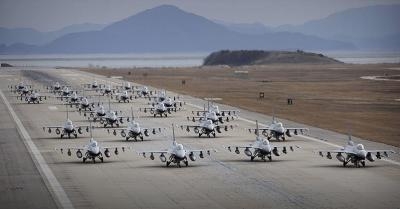
As the Air Force's lead for Combat Air Forces, ACC manages the flying-hour programs for four major commands. This decision to stand down or curtail operations affects about one-third of the active-duty CAF aircraft -- including those assigned to fighter, bomber, aggressor and airborne warning and control squadrons -- stationed in the U.S., Europe and the Pacific. "We must implement a tiered readiness concept where only the units preparing to deploy in support of major operations like Afghanistan are fully mission capable," said Gen. Mike Hostage, the ACC commander. "Units will stand down on a rotating basis so our limited resources can be focused on fulfilling critical missions."
"Historically, the Air Force has not operated under a tiered readiness construct because of the need to respond to any crisis within a matter of hours or days," Hostage said. "The current situation means we're accepting the risk that combat airpower may not be ready to respond immediately to new contingencies as they occur."
Some units currently deployed -- including A-10 Thunderbolt IIs, B-1 Lancers, F-16 Fighting Falcons and F-22 Raptors -- will stand down after they return from their deployments. The remaining units will stand down operations on April 9. Active-duty aircrews assigned to Air Force Reserve or Air National Guard A-10 or F-16 squadrons under an arrangement known as "active associations" will also stop flying. The stand down will remain in effect for the remainder of fiscal 2013 barring any changes to current levels of funding. "We're entering uncharted territory in terms of how we've had to take this year's cuts and make adjustments to mitigate the most serious impacts," Hostage said. "Remaining as mission-ready as possible for combatant commanders is our priority, and we're prioritizing spending to ensure this imperative is met."
Units that are stood down will shift their emphasis to ground training. They will use flight simulators to the extent possible within existing contracts, and conduct academic training to maintain basic skills and knowledge of their aircraft. As funding allows, aircrews will also complete formal ground training courses, conduct non-flying exercises and improve local flying-related programs and guidance. Maintainers will complete upgrade training and clear up backlogs of scheduled inspections and maintenance as possible given budget impacts in other areas, such as stock of spare parts.
Although each weapon system is unique, on average aircrews lose currency to fly combat missions within 90 to 120 days of not flying. It generally takes 60 to 90 days to conduct the training needed to return aircrews to mission-ready status, and the time and cost associated with that retraining increases the longer that crews stay on the ground. "This will have a significant and multiyear impact on our operational readiness," Hostage said. "But right now, there is no other acceptable way to implement these cuts."
(Image provided by the USAF)
More News
“We respectfully call on the City of Mesa to: 1. Withdraw the landing fee proposal immediately 2. Engage with the aviation community before making decisions that impact safet>[...]
High Speed Taxiway A long radius taxiway designed and provided with lighting or marking to define the path of aircraft, traveling at high speed (up to 60 knots), from the runway ce>[...]
Aero Linx: International Federation of Airworthiness (IFA) IFA uniquely combines together all those with responsibility for policies, principles and practices concerned with the co>[...]
Controller’s Expectation That VW02 Would Have Departed Sooner Led To An Inadequate Scan And Loss Of Situational Awareness Analysis: A Robinson R-44 helicopter N744AF, VW02 (V>[...]
A Few Questions AND Answers To Help You Get MORE Out of ANN! 1) I forgot my password. How do I find it? 1) Easy... click here and give us your e-mail address--we'll send it to you >[...]



 Aero-News: Quote of the Day (12.09.25)


 See All