Fri, Feb 10, 2012
Latest Edition Follows 44 Technologies From Space To
Terrestrial Pursuits
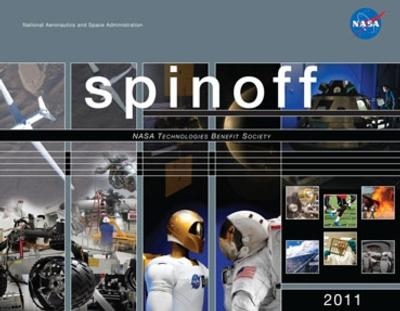
NASA's Spinoff 2011 publication, now available online, reveals
how the space agency's ingenuity and partnerships have saved
thousands of lives, and generated billions of dollars. The latest
edition of Spinoff records 44 journeys of NASA's most innovative
technologies. It chronicles their origins in NASA missions and
programs and their transfer to the public in the form of practical
commercial products and benefits to society.
"This year's Spinoff demonstrates once again how through
productive and innovative partnerships, NASA's aerospace research
brings real returns to the American people in the form of tangible
products, services and new jobs," NASA Administrator Charles Bolden
said. "For 35 years, Spinoff has been the definitive resource for
those who want to learn how space exploration benefits life on
Earth."
NASA spinoffs have proven benefits in health and medicine,
transportation, public safety, consumer goods, energy and the
environment, information technology, and industrial productivity,
stimulating the economy and creating new jobs and businesses.
Among the technologies highlighted in the edition:
- A new firefighting system, influenced by a NASA-derived rocket
design that extinguishes fires more quickly than traditional
systems, saving lives and property.
- Software employing NASA-invented tools to help commercial
airlines fly shorter routes and help save millions of gallons of
fuel each year, reducing costs to airlines while benefiting the
environment.
- A fitness monitoring technology developed with the help of NASA
expertise that, when fitted in a strap or shirt, can be used to
measure and record vital signs. The technology is now in use to
monitor the health of professional athletes and members of the
armed services.
- An emergency response software tool that can capture, analyze
and combine data into maps, charts and other information essential
to disaster managers responding to events such as wildfires, floods
or earthquakes. This technology can save millions of dollars in
losses from disasters and, more importantly, can help save lives
when tragedy strikes.
- This year's Spinoff includes a special section to celebrate the
commercial technologies that resulted from NASA's 30-year Space
Shuttle Program. Also featured are spinoffs that have come from the
construction of the International Space Station and work aboard the
orbiting outpost. An additional section discusses the potential
benefits of NASA's future technology investments.
"NASA's Office of the Chief Technologist has more than a
thousand projects underway that will create new knowledge and
capabilities, enabling NASA's future missions," NASA Chief
Technologist Mason Peck said. "As these investments mature, we can
expect new, exciting spinoff technologies transferring from NASA to
the marketplace, providing real returns on our investments in
innovation."
More News
Decision Altitude (DA) A specified altitude (mean sea level (MSL)) on an instrument approach procedure (ILS, GLS, vertically guided RNAV) at which the pilot must decide whether to >[...]
Aero Linx: T-34 Association, Inc. The T-34 Association was formed in July 1975 so that individuals purchasing then military surplus T-34As had an organization which would provide s>[...]
As He Released The Brakes To Begin Taxiing, The Brake Pedals Went To The Floor With No Braking Action Analysis: The pilot reported that during engine start up, he applied the brake>[...]
“Legislation like the Mental Health in Aviation Act is still imperative to hold the FAA accountable for the changes they clearly acknowledge need to be made... We cannot wait>[...]
Also: IAE Acquires Diamond Trainers, Army Drones, FedEx Pilots Warning, DA62 MPP To Dresden Tech Uni The danger to the flight training industry and our future pilots is clear. Dona>[...]



 ANN's Daily Aero-Term (12.08.25): Decision Altitude (DA)


 See All