
Airman From WWII Identified | Aero-News Network
Aero-News Network
RSS icon RSS feed
podcast icon MP3 podcast
Subscribe Aero-News e-mail Newsletter Subscribe

Airborne Unlimited -- Most Recent Daily Episodes

Episode Date

Airborne-Monday

Airborne-Tuesday

Airborne-Wednesday Airborne-Thursday

Airborne-Friday

Airborne On YouTube

Airborne-Unlimited-12.08.25

AirborneNextGen-
12.09.25

Airborne-Unlimited-12.10.25

Airborne-AffordableFlyers-12.11.25

AirborneUnlimited-12.05.25

AFE 2025 LIVE MOSAIC Town Hall (Archived): www.airborne-live.net

Sat, Nov 12, 2011

Airman From WWII Identified

Crewman On An Aircraft Shot Down On A Bombing Run Over Yugoslavia

The Department of Defense POW/Missing Personnel Office (DPMO) said earlier this week that the remains of a U.S. serviceman from World War II have been identified and are being returned to the family for burial with full military honors.

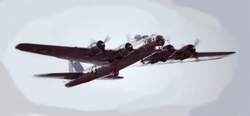
Army Air Forces Staff Sgt. Meceslaus T. Miaskiewicz, 27, of Salem, MA, will be buried on November 12, in his hometown. On May 18, 1944, Miaskiewicz and ten other airmen departed Tortorella Air Field, Italy, on a mission to bomb the Ploesti Oil Refinery in Romania, when their B-17G aircraft was shot down over Yugoslavia – what is now Bosnia-Herzegovina. Three of the crew members were detained as Prisoners of War by German forces, and returned to the United States at the end of the war. The rest of the crew was presumed dead.

In 1947, the U.S. Army Graves Registration Service (AGRS) recovered the remains of what was believed to be the missing eight crew members, who had been buried by the villagers of Stubica, near the site of the crash. AGRS identified six of the airmen, and the other two, thought to be Miaskiewicz and one other, were buried as group remains in Farmingdale, N.Y.

In 2011, U.S. government officials were notified that an archeological team from the town of Ljubuski, had disinterred the remains of an American, whose grave had been tended by the villagers of Stubica for more than 65 years. The Armed Forces Regional Medical Examiner’s Office in Germany identified the remains as Miaskiewicz.

Among other forensic identification tools and circumstantial evidence, scientists from the Armed Forces Regional Medical Examiner’s Office for Europe used dental analysis and mitochondrial DNA — which matched that of Miaskiewicz’s sisters — in the identification of his sremains.

FMI: www.dtic.mil/dpmo

Advertisement

More News

ANN's Daily Aero-Term (12.08.25): Decision Altitude (DA)

Decision Altitude (DA) A specified altitude (mean sea level (MSL)) on an instrument approach procedure (ILS, GLS, vertically guided RNAV) at which the pilot must decide whether to >[...]

ANN's Daily Aero-Linx (12.08.25)

Aero Linx: T-34 Association, Inc. The T-34 Association was formed in July 1975 so that individuals purchasing then military surplus T-34As had an organization which would provide s>[...]

NTSB Final Report: Piper PA-31T3

As He Released The Brakes To Begin Taxiing, The Brake Pedals Went To The Floor With No Braking Action Analysis: The pilot reported that during engine start up, he applied the brake>[...]

Aero-News: Quote of the Day (12.08.25)

“Legislation like the Mental Health in Aviation Act is still imperative to hold the FAA accountable for the changes they clearly acknowledge need to be made... We cannot wait>[...]

Airborne-Flight Training 12.04.25: Ldg Fee Danger, Av Mental Health, PC-7 MKX

Also: IAE Acquires Diamond Trainers, Army Drones, FedEx Pilots Warning, DA62 MPP To Dresden Tech Uni The danger to the flight training industry and our future pilots is clear. Dona>[...]

blog comments powered by Disqus



Advertisement

Advertisement

Podcasts

Advertisement

© 2007 - 2025 Web Development & Design by Pauli Systems, LC

