Next Up: Aerial Refueling Trials
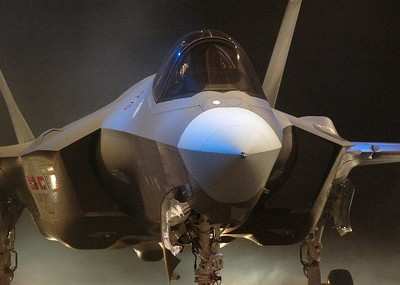
On its 20th flight, the first F-35 Lightning II successfully
tested engine performance and aircraft handling qualities at up to
20,000 feet as pilots and crew prepare for air refueling in the
coming weeks. Shortly afterward, a dedicated test-bed aircraft
began final check-out flights for airborne testing of the Lightning
II's Communication-Navigation-Identification system, initiating a
test program that will ultimately integrate and fly the complete
F-35 avionics package.
"We are poised for a long run of testing on both of these
aircraft," said Dan Crowley, Lockheed Martin executive vice
president and F-35 program general manager. "For the F-35, those
tests include refueling from an airborne tanker in the short term
and supersonic flights next year. At the same time, we are putting
the finishing touches on our first short takeoff/vertical landing
F-35 aircraft, which will roll out of the factory this month and
initiate flight testing in the spring. By the end of 2008, we
expect to have at least three F-35s in the air and numerous
aircraft on the assembly line."
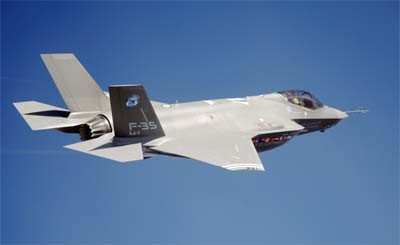
The Lightning II's flight began at 1330 CST December 7, when
Chief Test Pilot Jon Beesley executed a military-power (full power
without afterburner) takeoff, ran the engine at various power
settings and checked flying qualities at 6,000, 17,500 and 20,000
feet, and performed a fuel-dump test at 250 knots. Landing was at
1415 CST.
Beesley reported the tests were successful, and the jet was a
pleasure to fly.
"The Lightning II embodies a long list of advancements that will
make it better, smarter and more reliable than anything that's come
before it, and those technologies are extraordinarily mature in
this first-ever F-35," Beesley said. "When you project ahead to the
F-35s that will be entering the fleet in 2010, you see fighters
that benefit from the testing we're doing now -- fighters that will
set new standards for combat-readiness right out of the box."
At 1550 CST, the Cooperative Avionics Test Bed -- "CATBird" --
took off on a two-hour functional check flight, one of its final
sorties before aerial F-35 mission systems testing begins. CATBird
is a highly modified 737 airliner designed to test, integrate and
validate the full F-35 mission systems suite in a dynamic, airborne
environment before the system ever flies in an F-35 aircraft.
CATBird flights with the CNI system operating will be the first
in a series of airborne tests that will methodically add
constituent elements of the F-35 mission systems suite until the
entire Lightning II avionics package is onboard the CATBird. The
mission systems will be fully integrated and operating as they
would on an F-35 aircraft - a first for a fighter test program.
"The F-35 will have the most powerful and comprehensive avionics
ever flown on a fighter aircraft, and it represents a phenomenal
capability," said Doug Pearson, Lockheed Martin vice president of
the F-35 Integrated Test Force. "Our goal is to get the system
perfected on the CATBird so that it works exactly as advertised
when we put it in the Lightning II fighter."



 Aero-News: Quote of the Day (12.09.25)


 See All