Thu, Feb 24, 2022
Launch Delivers Projects, Supplies, and Experiments to Mission 66
Taking on the perceived dominance of SpaceX in taking on resupply missions for the International Space Station, Northrop Grumman successfully delivered an 8,300-pound supply run aboard a Cygnus spacecraft.
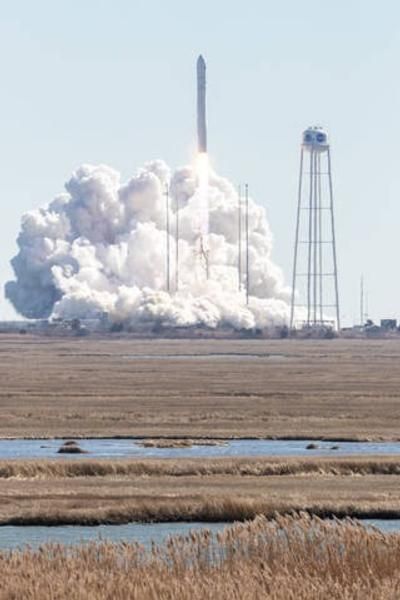
The delivery marks the 17th contracted mission under the company's Commercial Resupply Services contract. The Cygnus will remain at the station until May, when it will deploy CubeSats and drop thousands of pounds of garbage during re-entry for easy disposal.
Aboard the resupply mission, a number of scientific projects, equipment, and experiments were delivered alongside the regular day to day living and operational cargo needed to survive in orbit. The experiments will join more than 250 similar scientific efforts already in progress on the station during NASA's Expedition 66 mission.
Some of the banner projects include cell cultures to assess skin deterioration, aging, and the effects of microgravity on dermal cells over their lifetime. Colgate hopes that its Skin Aging program will "speed development of products aimed at protecting skin from the aging process on Earth." Another medical specialist, MicroQuin, has a similar project to analyze the effects of a therapy on breast and prostate cancer cells. The company has seen indications that the desired cells tend to grow into a more natural, effective 3-dimensional model while in microgravity, making it easier to analyze their workings and place in the greater human ecosystem at a microscopic level.
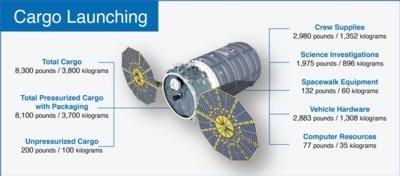
Other equipment projects include a space demonstrator for solid-state lithium ion batteries in zero gravity and an advanced hydrogen sensor system. Those parts will test for possible improvements to vital atmosphere sensors that currently require higher, constant replacement throughout the mission to ensure safety. Finally, a prototype, multi-fuel combustion tester to assess varying concentrations of oxygen and fuel pressures to improve the safety of future EVA suits, materials, and fire suppressors in space.
More News
From 2023 (YouTube Edition): "Ain’t Your Daddy’s Super Cub”—Don Wade Co-owned by Don and Ron Wade—the former of Don’s Dream Machines, a storied >[...]
Pilot-Rated Passenger Reported That The Pilot Did Not Adequately “Round Out” The Landing Flare And The Airplane Bounced And Yawed To The Right Analysis: The pilot state>[...]
Dead Reckoning Dead reckoning, as applied to flying, is the navigation of an airplane solely by means of computations based on airspeed, course, heading, wind direction, and speed,>[...]
Aero Linx: Lake Amphibian Club This website is created and sponsored by the Lake Amphibian Club, to help spread the word about these wonderful, versatile amphibians that can land j>[...]
“I am deeply honored to be sworn in as NASA administrator. NASA’s mission is as imperative and urgent as ever — to push the boundaries of human exploration, ignit>[...]



 Classic Aero-TV: In Praise of Alabamas Patriot Aircraft USA


 See All