Sun, Feb 06, 2022
Guarantees That Air Above Property is Free of Interference, but Subject to Right of Passage
West Virginia's State Senate passed a bill with unanimous approval this week, one which could assist property owners throughout the state in identifying the extent of their airspace holdings.
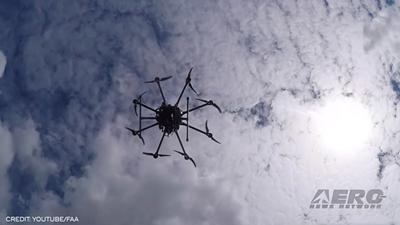
If Senate Bill 5 passes, airspace over housing will be opened to unmanned aircraft, with a buffer zone closer to ground level reserved for the residents below. The move is hoped to foster advancement and development of the UAS industry throughout the state, allowing operators peace of mind and the ability to fly without undue trouble. Local professors with West Virginia University’s Unmanned Aerial Systems Research told news stations the move will attract business to the state, a sorely needed change after ranking among the most drone-unfriendly states in the union. Whether or not the bill will see its way through to fulfillment remains unknown, but has been described as a win either way as long as the overture is noticed by UAS operators.
The bill would create an Unmanned Systems Advisory Council to identify trends, develop state strategies, develop legislation, and deal with public facing drone issues. The bill sets out procedures for the use and transfer of airspace above government property, as well as delineates the use envelope of airspace terrestrial property owners are entitled to.
Of particular note to operators, the particular text of the bill seeks to harmonize the interests of aircraft and property residents, reading "The ownership of the space above the lands and waters of this state is declared to be vested in the owner of the surface beneath, but this ownership extends only so far as is necessary to the enjoyment and use of the surface without the interference and is subject to the right of passage or flight of aircraft, including unmanned aircraft systems."
Senator Chandler Swope, the sponsor of the bill, hopes to bump West Virginia’s standing in drone rankings and bring a portion of the rapidly growing industry into their own backyard. “West Virginia has the terrain,” Swope said. “We have mountains, valleys, bridges, towers, we’ve got everything including the weather that’s variable with turbulence and all that. So geographically, we think we’re an ideal location for doing research and development.”
More News
Its Offerings Are Lighter, Cleaner, and Now Pushing Past 1,000nm on SAF Jet Fuel DeltaHawk’s diesel-powered aircraft lineup has seen incredible upgrades over the last few yea>[...]
The Airplane Experienced A Total Loss Of Engine Power On December 3, 2025, about 1600 central standard time, a Mooney Aircraft Corp. M20K, N57229, was substantially damaged when it>[...]
Make Sure You NEVER Miss A New Story From Aero-News Network Do you ever feel like you never see posts from a certain person or page on Facebook or Instagram? Here’s how you c>[...]
Aero Linx: European Society of Aerospace Medicine (ESAM) As a pan-European, independent forum, it works to promote the safety and health of all persons involved in aviation and spa>[...]
“We are excited to see Wisk achieve this milestone, and I’m so proud of the team that made it possible. The team at Wisk has built advanced technologies across flight c>[...]



 Aero-TV: DeltaHawks Diesel Power Steps Into the Spotlight


 See All