Mon, May 11, 2009
Will Develop, Fly 'Phantom Ray' Technology Demonstrator
Boeing has announced plans to develop and demonstrate an
unmanned flying test bed for advanced air system technologies. The
internally funded program, called Phantom Ray, will use the
prototype vehicle that Boeing originally developed for the Defense
Advanced Research Projects Agency (DARPA)/U.S. Air Force/U.S. Navy
Joint-Unmanned Combat Air System (J-UCAS) program.

The Phantom Ray demonstrator is scheduled to make its first
flight in December 2010. The aircraft will conduct 10 flights over
a period of approximately six months, supporting missions that may
include intelligence, surveillance and reconnaissance; suppression
of enemy air defenses; electronic attack; hunter/killer; and
autonomous aerial refueling. The Boeing Phantom Works organization
is employing rapid-prototyping techniques that facilitate the speed
and agility needed to meet the 2010 flight schedule.
"Boeing's goals for the Phantom Ray program clearly demonstrate
our commitment to rapid prototyping and are an important part of
the company's efforts to be a leader in the unmanned aircraft
business," said Phantom Works President Darryl Davis. "We have
mobilized our assets to continue the tremendous potential we
developed under J-UCAS, and now will fully demonstrate that
capability."
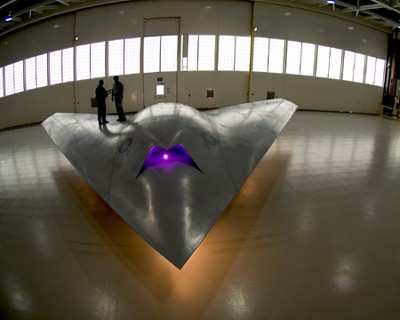
Phantom Ray will pick up where the UCAS program left off in 2006
by further demonstrating Boeing's unmanned systems development
capabilities in a fighter-sized, state-of-the-art aerospace system.
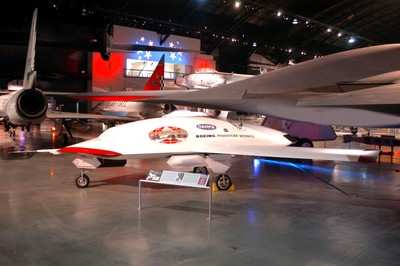
The Boeing UCAS program began with the X-45A, which successfully
flew 64 times from 2002 to 2005. Those flights included a
demonstration exercise with two X-45A aircraft that marked the
first unmanned, autonomous multivehicle flight under the control of
a single pilot. Boeing also designed a larger UCAS aircraft, the
X-45C, which will serve as the basis for the Phantom Ray
demonstrator.
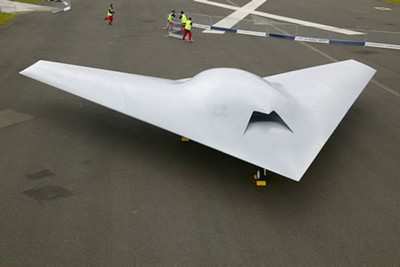
"What is particularly exciting about Phantom Ray is that we will
incorporate the latest technologies into the superb X-45C airframe
design," said Dave Koopersmith, vice president of Boeing Advanced
Military Aircraft, a division of Phantom Works. "As we gradually
expand the vehicle's flight envelope, potential users will have
access to a full range of unique capabilities that only this type
of autonomous platform can provide."
Lab testing for the Phantom Ray air vehicle is scheduled for
late 2009, followed by ground testing and first flight in 2010.
More News
“We respectfully call on the City of Mesa to: 1. Withdraw the landing fee proposal immediately 2. Engage with the aviation community before making decisions that impact safet>[...]
High Speed Taxiway A long radius taxiway designed and provided with lighting or marking to define the path of aircraft, traveling at high speed (up to 60 knots), from the runway ce>[...]
Aero Linx: International Federation of Airworthiness (IFA) IFA uniquely combines together all those with responsibility for policies, principles and practices concerned with the co>[...]
Controller’s Expectation That VW02 Would Have Departed Sooner Led To An Inadequate Scan And Loss Of Situational Awareness Analysis: A Robinson R-44 helicopter N744AF, VW02 (V>[...]
A Few Questions AND Answers To Help You Get MORE Out of ANN! 1) I forgot my password. How do I find it? 1) Easy... click here and give us your e-mail address--we'll send it to you >[...]



 Aero-News: Quote of the Day (12.09.25)


 See All