
Aero-TV: The Green Flight Challenge -- NASA Supports Electric Propulsion | Aero-News Network
Aero-News Network
RSS icon RSS feed
podcast icon MP3 podcast
Subscribe Aero-News e-mail Newsletter Subscribe

Airborne Unlimited -- Most Recent Daily Episodes

Episode Date

Airborne-Monday

Airborne-Tuesday

Airborne-Wednesday Airborne-Thursday

Airborne-Friday

Airborne On YouTube

Airborne-Unlimited-12.08.25

AirborneNextGen-
12.09.25

Airborne-Unlimited-12.10.25

Airborne-AffordableFlyers-12.11.25

AirborneUnlimited-12.12.25

AFE 2025 LIVE MOSAIC Town Hall (Archived): www.airborne-live.net

Wed, Oct 05, 2011

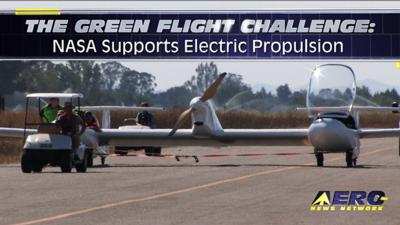
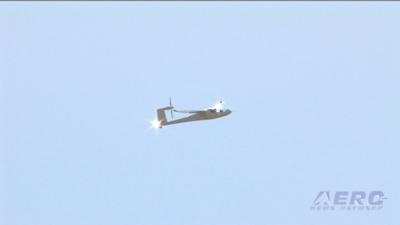
Aero-TV: The Green Flight Challenge -- NASA Supports Electric Propulsion

Is This The First Of A New Generation Of Airplanes???

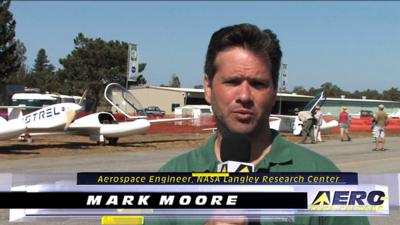
If you wanted to see aviation history in the making this week, you needed to join ANN's Nathan Cremisino at the CAFE Green Flight Challenge, where the fine folks of NASA awarded the largest prize in aviation history, created to inspire the development of more fuel-efficient aircraft and spark the start of a new electric airplane industry.

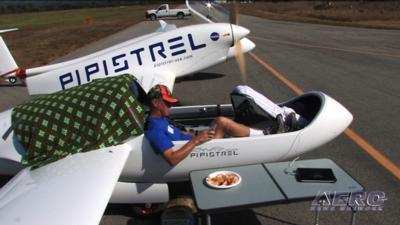
The technologies demonstrated by the CAFE Green Flight Challenge, sponsored by Google, competitors may end up in general aviation aircraft, spawning new jobs and new industries for the 21st century. The first place prize of $1.35 million was awarded to team Pipistrel-USA.com of State College, Pa. The second place prize of $120,000 went to team eGenius, of Ramona, Calif.

Fourteen teams originally registered for the competition. Three teams successfully met all requirements and competed in the skies over the Charles M. Schulz Sonoma County Airport in Santa Rosa, Calif. The competition was managed by the Comparative Aircraft Flight Efficiency (CAFE) Foundation under an agreement with NASA.

The winning aircraft had to fly 200 miles in less than two hours and use less than one gallon of fuel per occupant, or the equivalent in electricity. The first and second place teams, which were both electric-powered, achieved twice the fuel efficiency requirement of the competition, meaning they flew 200 miles using just over a half-gallon of fuel equivalent per passenger.

This week's competition marks the culmination of more than two years of aircraft design, development and testing for the teams. It represents the dawn of a new era in efficient flight and is the first time that full-scale electric aircraft have performed in competition. Collectively, the competing teams invested more than $4 million in pursuit of the challenge prize purse.

FMI: www.cafefoundation.org, www.nasa.gov, www.aero-tv.net, www.youtube.com/aerotvnetwork, http://twitter.com/AeroNews


Advertisement

More News

Aero-News: Quote of the Day (12.09.25)

“We respectfully call on the City of Mesa to: 1. Withdraw the landing fee proposal immediately 2. Engage with the aviation community before making decisions that impact safet>[...]

ANN's Daily Aero-Term (12.09.25): High Speed Taxiway

High Speed Taxiway A long radius taxiway designed and provided with lighting or marking to define the path of aircraft, traveling at high speed (up to 60 knots), from the runway ce>[...]

ANN's Daily Aero-Linx (12.09.25)

Aero Linx: International Federation of Airworthiness (IFA) IFA uniquely combines together all those with responsibility for policies, principles and practices concerned with the co>[...]

NTSB Final Report: Diamond Aircraft Ind Inc DA20C1 (A1); Robinson Helicopter R44

Controller’s Expectation That VW02 Would Have Departed Sooner Led To An Inadequate Scan And Loss Of Situational Awareness Analysis: A Robinson R-44 helicopter N744AF, VW02 (V>[...]

ANN FAQ: Q&A 101

A Few Questions AND Answers To Help You Get MORE Out of ANN! 1) I forgot my password. How do I find it? 1) Easy... click here and give us your e-mail address--we'll send it to you >[...]

blog comments powered by Disqus



Advertisement

Advertisement

Podcasts

Advertisement

© 2007 - 2025 Web Development & Design by Pauli Systems, LC

