Thu, Nov 11, 2021
Continuing Sustainable Fuel Work at Marignane Shows Progress
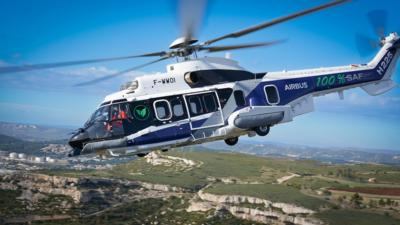
Airbus completed the first ever helicopter flight using 100% sustainable aviation fuel as part of its SAF development. As the aviation industry around the world looks to upcoming emissions, sustainability, and environmental targets, manufacturers are preparing for alternative fuels to take the stage from traditional petrochemical fuels. Airbus has launched a user group dedicated to the evaluation and integration of SAF into the rotary-wing community.
It has been a banner year for sustainable fuel, with rotorcraft competitor Bell Canada announcing the use of blended SAF in its training, transit, and customer delivery operations, with efforts to move to 100% SAF in the near future. Changing fuels is never an entirely simple process in aircraft, as safety and reliability are paramount, but stakeholders are confident it is the way forward for the industry. Airbus specifically publicized their use of the unadulterated fuel, no small feat when the currently approved SAF blend is capped at 50%.
The flight campaign successfully flew with an unblended SAF, provided by TotalEnergies, derived from used cooking oil. The H225 test helicopter apparently functioned well, and boasted a 90% CO2 reduction compared to regular jet fuel. Continued use and testing will prove what effects a longer-term flight regime has on the aircraft, but Airbus chief technical officer Stefan Thome, sounds optimistic.
“While all Airbus helicopters are certified to fly with up to a 50% blend of SAF mixed with kerosene, it is our Company’s ambition to have its helicopters certified to fly with 100% SAF within the decade. Today’s flight is an important first step towards this goal”, said Thome.
“SAF is an important pillar of Airbus Helicopters’ decarbonisation strategy because it provides immediate CO2 reduction with no negative impact on the performance of the helicopter,” he added. “I thank our partners Safran Helicopter Engines and TotalEnergies for their important collaboration in making today’s flight a reality. Further cooperation among all industry stakeholders is essential to overcome the challenges associated with implementing SAF widely and to make real progress in reducing the aviation industry’s CO2 emissions”.
More News
Aero Linx: Commercial Aviation Safety Team (CAST) Founded in 1997, the Commercial Aviation Safety Team (USCAST) has developed an integrated, data-driven strategy to reduce the comm>[...]
Land And Hold Short Operations Operations that include simultaneous takeoffs and landings and/or simultaneous landings when a landing aircraft is able and is instructed by the cont>[...]
We're Everywhere... Thanks To You! Even with the vast resources and incredibly far-reaching scope of the Aero-News Network, every now and then a story that should be reported on sl>[...]
Pilot’s Inadvertent Use Of The Landing Gear Control Handle Instead Of The Flaps Selector Switch During The Landing Rollout Analysis: The pilot reported that during the landin>[...]
Also: Cosmonaut Kicked Out, Airbus Scales Back, AF Silver Star, Russian A-60 Clobbered A Samaritan’s Purse humanitarian flight was hijacked on Tuesday, December 2, while atte>[...]



 ANN's Daily Aero-Linx (12.12.25)


 See All