
UAV Firefighting, SAR Capabilities Demonstrated | Aero-News Network
Aero-News Network
RSS icon RSS feed
podcast icon MP3 podcast
Subscribe Aero-News e-mail Newsletter Subscribe

Airborne Unlimited -- Most Recent Daily Episodes

Episode Date

Airborne-Monday

Airborne-Tuesday

Airborne-Wednesday Airborne-Thursday

Airborne-Friday

Airborne On YouTube

Airborne-Unlimited-12.01.25

AirborneNextGen-
12.02.25

Airborne-Unlimited-11.19.25

Airborne-AffordableFlyers-11.20.25

AirborneUnlimited-11.21.25

LIVE MOSAIC Town Hall (Archived): www.airborne-live.net

Thu, Nov 17, 2016

UAV Firefighting, SAR Capabilities Demonstrated

Lockheed Martin UAS And Optionally-Piloted Helicopters Work Together In Test

Lockheed Martin recently demonstrated for the first time how its suite of optionally-piloted helicopters and small unmanned aerial systems can work together to successfully locate and extinguish fires, pinpoint the location of a missing person, and bring that person to safety.

"When lives are at risk, advanced human-machine teams can complete dangerous missions without putting others in harm's way," said Dan Spoor, vice president, unmanned systems. "The advances that Lockheed Martin is pioneering in autonomous and unmanned technologies will lead to improved safety and efficiency for humanitarian aid, first response and other civil, commercial and military operations in the air, on land and undersea."

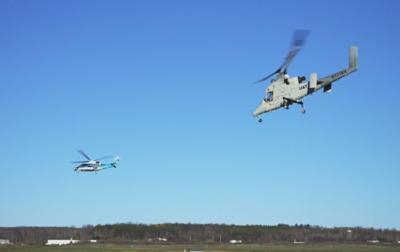
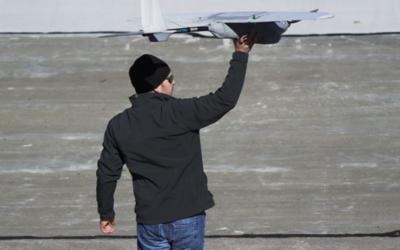
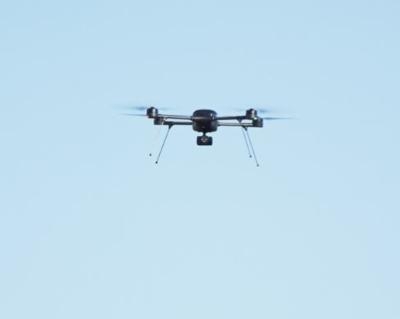
During this demonstration, the optionally piloted Kaman K-MAX and the Sikorsky Autonomy Research Aircraft (SARA) engaged in collaborative firefighting and search-and-rescue with the Indago quadrotor and Desert Hawk 3.1 fixed wing unmanned aircraft system (UAS) providing information, surveillance and reconnaissance.

Also during the demonstration, the Indago identified hot spots and relayed that information to an operator who directed the K-MAX to autonomously retrieve water from a nearby pond and drop it onto the fire, thus extinguishing the flames.

The Desert Hawk identified the location of a missing person and SARA, a modified S-76 commercial helicopter, conducted the search and directed the rescue. The Sikorsky MATRIX technology on SARA gives operators the confidence to fly large rotorcraft safely, reliably and affordably as autonomous or optionally piloted aircraft.

Lockheed Martin integrated the MATRIX technology with K-MAX so that SARA and K-MAX could communicate with each other during the demonstration. Using information provided by K-MAX, SARA autonomously scanned the area and found a safe place to land.

"Our goal is to support the integration of autonomy into aviation to improve the safety and capabilities for military and commercial missions. Utilizing MATRIX to support the mission in this demonstration highlights an example of the ability to reduce pilot workload and augment mission performance," said Mark Miller, vice president, engineering and technology, Sikorsky, a Lockheed Martin Company.

The New York UAS Test Site Operations Center at Griffiss International Airport also demonstrated progress toward UAS Traffic Management (UTM). The center uses radars and sensors to enable the tracking of manned, unmanned and optionally-piloted aircraft systems.

"UAS traffic management must keep pace with the technology innovations that are bringing helicopters to the sky with a laptop or tablet," said Lawrence Brinker, executive director & general counsel of the NUAIR Alliance. "The progress that has been made through the collaboration of federal agencies and companies like Lockheed Martin, will pave the way to help the Federal Aviation Administration safely manage air traffic without on-board pilots."

Autonomous and unmanned systems are changing the way militaries operate and protect forces, the way first responders fight fires and how researchers explore the ocean terrains. Lockheed Martin is extending the capabilities of human-machine team to expand across air, land and sea domains

(Images provided with Lockheed Martin news release)

FMI: www.lockheedmartin.com/unmanned

Advertisement

More News

ANN's Daily Aero-Term (12.01.25): Convective SIGMET

Convective SIGMET A weather advisory concerning convective weather significant to the safety of all aircraft. Convective SIGMETs are issued for tornadoes, lines of thunderstorms, e>[...]

ANN's Daily Aero-Linx (12.01.25)

Aero Linx: United Flying Octogenarians WELCOME to a most extraordinary group of aviators, the United Flying Octogenarians (UFO). Founded in 1982 with just a handful of pilots, we h>[...]

NTSB Final Report: Remos Aircraft GmbH Remos GX

Pilot’s Decision To Attempt Takeoff With Frost Covering The Airplane’s Wings Analysis: The pilot of the light sport airplane was preparing to depart for a cross-country>[...]

Aero-News: Quote of the Day (12.02.25)

“We’ve paid for the cable line’s repair for the customer and have apologized for the inconvenience this caused them...” Source: Some followup info from an A>[...]

ANN's Daily Aero-Term (12.02.25): Coupled Approach

Coupled Approach An instrument approach performed by the aircraft autopilot, and/or visually depicted on the flight director, which is receiving position information and/or steerin>[...]

blog comments powered by Disqus



Advertisement

Advertisement

Podcasts

Advertisement

© 2007 - 2025 Web Development & Design by Pauli Systems, LC

