

Airman MIA From Vietnam War Identified | Aero-News Network
Aero-News Network
RSS icon RSS feed
podcast icon MP3 podcast
Subscribe Aero-News e-mail Newsletter Subscribe

Airborne Unlimited -- Most Recent Daily Episodes

Episode Date

Airborne-Monday

Airborne-Tuesday

Airborne-Wednesday Airborne-Thursday

Airborne-Friday

Airborne On YouTube

Airborne-Unlimited-12.08.25

AirborneNextGen-
12.09.25

Airborne-Unlimited-12.10.25

Airborne-AffordableFlyers-12.11.25

AirborneUnlimited-12.12.25

AFE 2025 LIVE MOSAIC Town Hall (Archived): www.airborne-live.net

Tue, Nov 27, 2007

Airman MIA From Vietnam War Identified

"Until They Are Home"

The Department of Defense POW/Missing Personnel Office (DPMO) announced Tuesday the remains of a US serviceman, missing in action from the Vietnam War, have been identified and will be returned to his family for burial with full military honors.

He is Captain Stephen A. Rusch, US Air Force, of Lambertville, NJ. He will be buried November 30 at Arlington National Cemetery near Washington, DC.

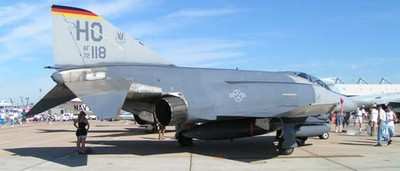
On March 7, 1972, Rusch was the weapons systems officer in an F-4E Phantom II aircraft attacking enemy targets in Salavan Province, Laos. The plane was the second aircraft in a flight of two. When Rusch's aircraft was cleared to begin its second run over enemy targets, the flight leader of the number one aircraft lost sight of Rusch's plane and observed enemy ground fire followed by a large explosion. An immediate search was begun, but all attempts to establish radio contact and later search efforts were unsuccessful.

In 1995, a joint US/Lao People's Democratic Republic (L.P.D.R.) team, led by the Joint POW/MIA Accounting Command (JPAC), investigated the incident and interviewed several Laotian citizens. The team surveyed the crash site identified by one of the citizens and found aircraft wreckage.

In 2001, a US citizen, acting as an intermediary for a Laotian citizen, turned over to US officials a bone fragment and a photocopy of Rusch's military identification tag. The bone fragment proved not to be from Captain Rusch.

In 2002-2003, joint teams conducted two excavations of the crash site. The teams recovered human remains and non-biological evidence including US coins and life support equipment. Among other forensic identification tools and circumstantial evidence, scientists from JPAC and the Armed Forces DNA Identification Laboratory also used mitochondrial DNA and dental comparisons in the identification of the remains.

Welcome home, Captain. A grateful nation bids you peace and appreciates your sacrifice.

FMI: www.dtic.mil/dpmo

Advertisement

More News

Aero-News: Quote of the Day (12.11.25)

"The owners envisioned something modern and distinctive, yet deeply meaningful. We collaborated closely to refine the flag design so it complemented the aircraft’s contours w>[...]

ANN's Daily Aero-Term (12.11.25): Nonradar Arrival

Nonradar Arrival An aircraft arriving at an airport without radar service or at an airport served by a radar facility and radar contact has not been established or has been termina>[...]

Classic Aero-TV: David Uhl and the Lofty Art of Aircraft Portraiture

From 2022 (YouTube Edition): Still Life with Verve David Uhl was born into a family of engineers and artists—a backdrop conducive to his gleaning a keen appreciation for the >[...]

Airborne-NextGen 12.09.25: Amazon Crash, China Rocket Accident, UAV Black Hawk

Also: Electra Goes Military, Miami Air Taxi, Hypersonics Lab, MagniX HeliStrom Amazon’s Prime Air drones are back in the spotlight after one of its newest MK30 delivery drone>[...]

Airborne 12.05.25: Thunderbird Ejects, Lost Air india 737, Dynon Update

Also: Trailblazing Aviator Betty Stewart, Wind Farm Scrutiny, Chatham Ban Overturned, Airbus Shares Dive A Thunderbird pilot, ID'ed alternately as Thunderbird 5 or Thunderbird 6, (>[...]

blog comments powered by Disqus



Advertisement

Advertisement

Podcasts

Advertisement

© 2007 - 2025 Web Development & Design by Pauli Systems, LC

