

FAA ARAC Focuses On Helicopter Safety | Aero-News Network
Aero-News Network
RSS icon RSS feed
podcast icon MP3 podcast
Subscribe Aero-News e-mail Newsletter Subscribe

Airborne Unlimited -- Most Recent Daily Episodes

Episode Date

Airborne-Monday

Airborne-Tuesday

Airborne-Wednesday Airborne-Thursday

Airborne-Friday

Airborne On YouTube

Airborne-Unlimited-12.01.25

AirborneNextGen-
12.02.25

Airborne-Unlimited-12.03.25

Airborne-FltTraining-12.04.25

AirborneUnlimited-12.05.25

AFE 2025 LIVE MOSAIC Town Hall (Archived): www.airborne-live.net

Fri, Nov 06, 2015

FAA ARAC Focuses On Helicopter Safety

Number Of Fatal Accidents Remains Stubbornly High

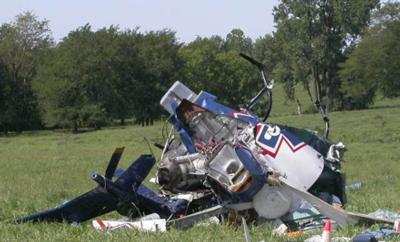
The total number of U.S. helicopter accidents has steadily declined over the past 10 years, but the aviation community has not made sustainable progress in reducing the number of fatal accidents, according to the FAA.

In response to the FAA’s  2013-2014 post-crash fire and blunt force trauma study, along with concerns raised by the National Transportation Safety Board (NTSB), the FAA has tasked the Aviation Rulemaking Advisory Committee’s (ARAC) Rotorcraft Occupant Protection Working Group to take a new look at the airworthiness standards for older helicopter type designs. This work will focus on solutions that give helicopter occupants the greatest possible chance of surviving an emergency landing or accident.

The FAA issued rules in the 1980s and 1990s to protect helicopter crews and passengers from blunt force trauma and post-crash fires. Those rules raised occupant protection standards for new type-design helicopters. However, the rules did not apply to newly-manufactured helicopters with older type designs still in production, including new “derivative” models that are sufficiently similar to older type designs.

As a result, most helicopters produced today are not required to include life-saving features such as crash-resistant fuel systems and energy-absorbing seats mandated by later rules, and voluntary equipage has been slow.  In fact, as of the end of 2014, only 16 percent of the U.S. helicopter fleet included crash-resistant fuel systems and only 10 percent had energy absorbing seats.
 
The Rotorcraft Occupant Protection Working Group will provide the FAA with three reports over the next six-to-24 months. Information about the group’s tasking and deliverables are outlined in the Federal Register.

(Source: FAA news release. Image from file)

FMI: www.faa.gov

Advertisement

More News

Classic Aero-TV: VerdeGo Debuts VH-3 Hybrid-Electric Powerplant

From 2023 (YouTube Edition): New Propulsion Scheme Optimized for AAM Applications Founded in 2017 by Eric Bartsch, Pat Anderson, and Erik Lindbergh (grandson of famed aviation pion>[...]

NTSB Prelim: Grumman American Avn. Corp. AA-5B

During The Initial Climb, The Engine Began To Operate Abnormally And, After About Three Seconds, Experienced A Total Loss Of Power On October 29, 2025, about 1820 Pacific daylight >[...]

ANN's Daily Aero-Linx (12.02.25)

Aero Linx: Women in Aviation International Women in Aviation International is the largest nonprofit organization that envisions a world where the sky is open to all, and where avia>[...]

Aero-News: Quote of the Day (12.02.25)

“We’ve paid for the cable line’s repair for the customer and have apologized for the inconvenience this caused them...” Source: Some followup info from an A>[...]

Aero-News: Quote of the Day (12.03.25)

“We have long warned about the devastating effects of pairing optimization. Multiple times over many months, we highlighted how schedule manipulation, unbalanced schedules, a>[...]

blog comments powered by Disqus



Advertisement

Advertisement

Podcasts

Advertisement

© 2007 - 2025 Web Development & Design by Pauli Systems, LC

